
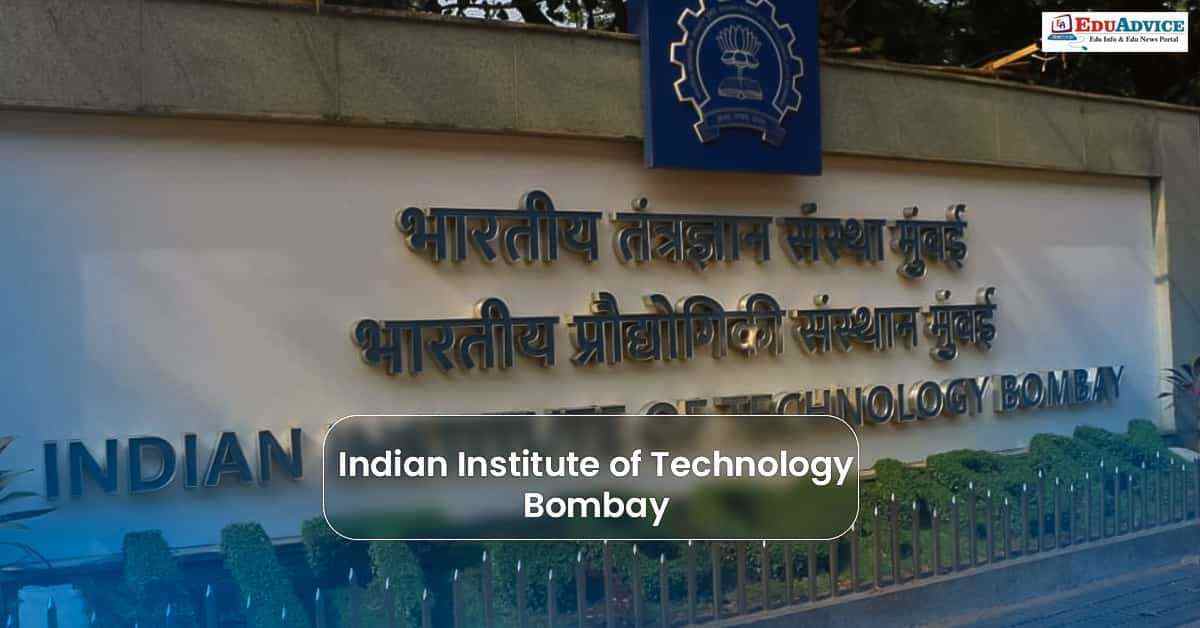
ASPIRE IIT Bombay Research Park: Deep-Tech Ecosystem Building
Mumbai : Deep-tech innovation faces significant challenges, and the ASPIRE - IIT Bombay Research Park seeks to resolve one of the most difficult of these challenges: the disconnect between great research ideas and user accessible technology.
ASPIRE, short for Applied Science Park for Innovation, Research and Entrepreneurship, integrates companies and startups with researchers and faculty and students in an innovation ecosystem on the campus of IIT Bombay. The Research Park is the creation of the Ministry of Education and IIT Bombay the facility for industry and academia collaboration.
ASPIRE IIT Bombay: Key Facts
|
Particular |
Details |
|---|---|
|
Full form |
Applied Science Park for Innovation, Research and Entrepreneurship |
|
Institution |
IIT Bombay |
|
Location |
IIT Bombay campus, Mumbai |
|
Established |
2016 |
|
Built-up area |
5 lakh sq ft |
|
Resident companies |
35 |
|
Associate companies |
25 |
|
Faculty engaged |
75+ |
|
Active industry collaborations |
40+ |
The construction cost for this G+14-floor facility of the Research Park building is reported to be Rs 225 crores. IIT Bombay's position explains the building as bringing industry research and development (R & D) teams closer to its researchers.
From Lab to Market Integration
The IIT Bombay Research Park enables companies the co-location opportunity with the IIT Bombay faculty and researchers, as well as access to research infrastructure and specialist talent and student resources. Collaborative R&D and the facilitation of the translation of technology is the goal of the model.
This model is particularly valuable to deep-tech startups where the commercialisation of technology frequently involves years of work with prototyping, testing, and validation. The model facilitates:
- Industry-sponsored research
- Collaborative R&D
- Technology development
- Prototyping and validation
- Technology transfer
- Startup-industry partnerships
- Access to IIT Bombay expertise and resources
Healthcare, AI, Robotics and Quantum Technology
ASPIRE's focused research clusters cover important technology domains. These are bioengineering and healthcare, sustainability, clean energy, quantum technology, materials and smart manufacturing, AI, robotics and automation, geospatial technology, semiconductors, and eMobility.
The cluster model is unique as it integrates anchor companies, startups, and translational research with COVID-based technology research. IIT Bombay's Strategy Plan 2026-2030 provides an overall direction with an emphasis on supporting developmental research in AI/ML, healthcare and MedTech, quantum technologies, semiconductors and advanced materials, space and defense, and stronger industry engagement and the accelerated translation of research to market-ready solutions.
Space Technology Takes Centre Stage
Space technology will become increasingly important in IIT Bombay’s industry engagement activities. The ecosystem focused on innovation at IIT Bombay links up researchers, start-ups and industries focused on emerging space and geospatial technologies. This engages with the ASPIRE model, through which companies can engage with IIT Bombay’s scientific facilities and experts to build market-ready products. This approach works best to serve the growing private space sector of India, where the technologies created need sophisticated engineering and research before they can be available for use in the market.
Deep-Tech Startups Find a Platform
The importance of ASPIRE was brought into sharp focus with the Bharat Innovates Deep-Tech Pre-Summit, which happened in the Research Park in March 2026. This two-day summit was designed to bridge the gap between deep-tech start-ups (137 of whom were selected out of more than 3,000 applications) and institutional support for high-risk technology start-ups with government, industry, and academic representatives and policymakers.
It demonstrates how the Research Park will provide a much-needed market for deep-tech start-ups and offset the vacuum of support for high-risk technology start-ups.
Why the Research Park Matters
IIT Bombay's technology transfer system has a substantial amount of activity. The Institute claims that over 100 technologies developed at IIT Bombay have been deployed, and several more are in the various stages of prototyping, licensing, and commercialisation.
ASPIRE adds to this by bringing companies closer to academic research, and this helps strengthen the pipeline of technologies. The current state of the Research Park (60 resident and associate members combined, 75+ faculty members, and 40+ active industry collaborations) demonstrates that the model has stepped out of the realm of experiments.
The Bigger Picture
The success of a research park should not be gauged by the number of companies located therein. Rather, it be measured by the ease of transition of research from the discovery phase to the prototype and validation phases and eventual deployment.
ASPIRE is built around facilitating this very gap. IIT Bombay's integration of academia, commerce, and startup ecosystems along with research infrastructure allows them to convert research with potential from the lab to market either for a commercial or social good purpose.
Final Thoughts
The ASPIRE Research Park at IIT Bombay is a significant facilitator of deep-tech research to industry-driven innovation. The 500,000 square feet of built up area, 60 resident and associate companies, 75+ faculty members, and 40+ industries collaborating make the park a well equipped research partnership hub.
Given IIT Bombay's investment in AI, MedTech, quantum technology, advanced materials, and defence and space, amongst others, ASPIRE will surely play a critical role in frontier research to usable technology. The new and challenging question is not how industry and academia collaboration will be achieved. Rather, the new challenge is how we can bring difficult research ideas from labs to the marketplace.
Click Here for More Science & Technology