
Swachhata Pakhwada 2026: DoSEL Conducts School Activity Reviews, Prepares for Swachhata Hi Seva, Special Campaign 6.0
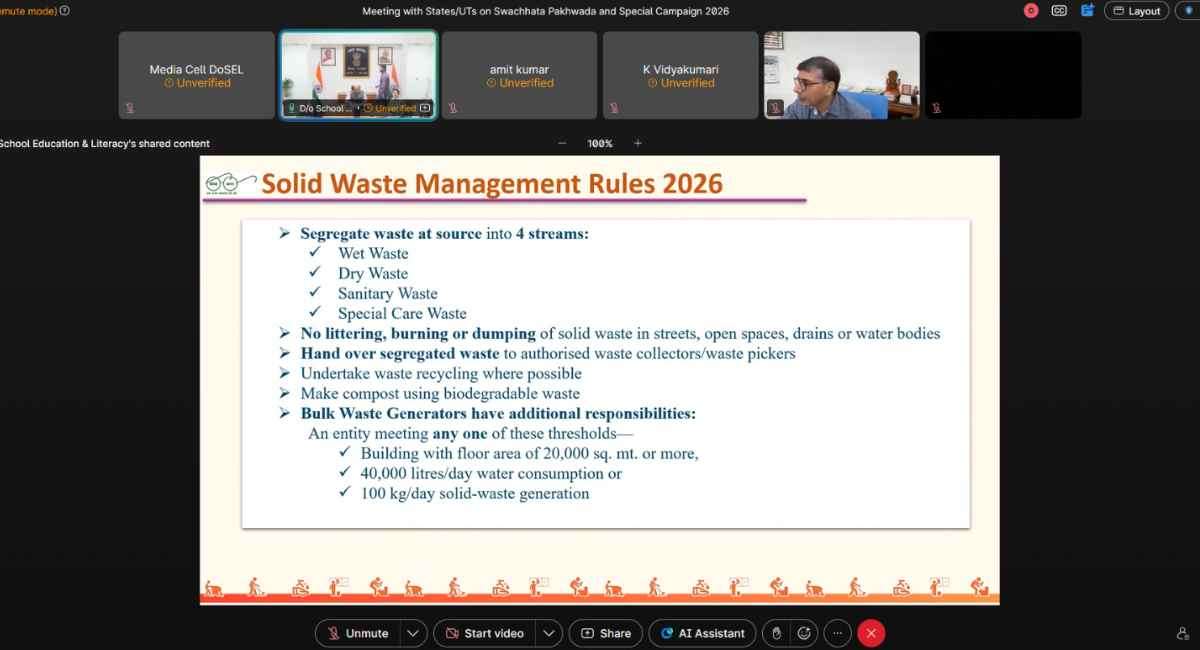
New Delhi: Secretary T. K. Anil Kumar chaired Swachhata Pakhwada evaluations and Swachhata Hi Seva 2026 and Special Campaign 6.0 preparation meetings organized by the Department of School Education and Literacy (DoSEL). The Ministry of Education stated that the meetings explained that cleaning initiatives need to move from the symbolic participation level to the implementation level.
During the review of the activities for Swachhata Pakhwada 2026, the Secretary stressed the implementation of all the planned activities across schools and to avoid treating them as events allocated on a calendar. Various states and union territories were also directed to emphasise the timely reporting of the scheduled activities.
DoSEL Reviews Ongoing Swachhata Pakhwada Activities
Secretary T. K. Anil Kumar stressed the implementation of activities that are meaningfully planned and not just treated as events time-bound by the calendar.
The Ministry, in a separate communication, has stressed the need for schools to extend the message of clean-up beyond the school premises. Schools were also directed to work with School Management Committees and local representatives to nurture consciousness in the surrounding communities for cleanliness and responsible behaviours.
Next Year’s Plans for Swachhata Hi Seva and Special Campaign 6.0
On the agenda for the meeting were plans for the 2026 iterations of Swachhata Hi Seva and Special Campaign 6.0. The 9th edition of the cleanliness campaign Swachhata Hi Seva is scheduled for 17 September to 2 October, 2026. According to the draft presented at the national level, this edition will focus on Creating opportunities for the public to participate in the mission to build a healthy and clean India.
For the school education system, this campaign provides another opportunity to associate the importance of cleanliness and environmental awareness with the development of civic sense among students. Creating this association is very important for students, as the impact of the cleanliness drive is largely sustained and visible only when cleanliness is an everyday practice.
Special Campaign 6.0 to Follow
Plans for Special Campaign 6.0 were also a focal point for the meeting. Special Campaign 6.0 will be implemented from 1 October to 30 October 2026. The preparatory phase will be before this. This campaign aims to reduce pendency, improve record management, and introduce cleanliness as an institutional process in all government offices.
For DoSEL and other components of the school education system, prior planning will be critical to ensure that the required activities are undertaken in a planned manner and reports are presented in the stipulated time frame.
Dr. Amarpreet Duggal presented the campaign framework.
During the meeting, Joint Secretary DoSEL, Dr Duggal, presented details of the three campaigns:
- Swachhata Pakhwada
- Swachhata Hi Seva
- Special Campaign 6.0
The combined review allows States and UTs to understand the timelines and expectations for each campaign while planning school-level activities.
Why These Campaigns Are Important For Schools
Garbage, hygiene and cleanliness drives done as part of campaigns in schools can have a positive impact outside the school compound. These drives can help students to develop habits outside the school.
The Ministry of Education has run several cleanliness programs targeting schools. Some programs included initiating drives in schools, conducting awareness programs, tree plantations, handwashing and other community engagement activities. In 2025, DoSEL reported a large participation of schools and students in Swachhata Hi Seva. This shows the potential of school cleanliness programs to bring massive participation.
This year, the Ministry is focusing on implementation. The focus is not on the number games. The goal is to bring behavioural change.
Eco Clubs and Mission LiFE Add Another Dimension
School cleanliness programs in line with Mission LiFE and Eco Clubs add another dimension to school cleanliness. This new dimension can provide a broader scope on the responsibility of the students towards the environment and sustainable living.
These sorts of programs can help make cleanliness and sustainability goals more real to the students.
A Shift From One-Day Drives to Everyday Habits
The goal of cleanliness drives is to make cleanliness part of the culture of educational institutions. For students, this means understanding the importance of waste segregation, proper hygiene, generating minimal waste, and taking ownership of their respective communities. For schools, this means organising activities, participation of the community, and documenting all their work. The goal is to replace campaign calendars with habits.
Final Thoughts
The DoSEL conference on Swachhata Pakhwada, Swachhata Hi Seva, and Special Campaign 6.0 is timely, as schools and States/UTs are expected to work toward the next set of two large-scale cleanliness initiatives even as the current Pakhwada activities are underway.
The focus is shifting from attracting more participants to sustained engagement. For schools, the best result may well be the simplest and the most difficult to achieve: the campaigns must change student mindsets and make them care about cleanliness beyond the tasks set in the school calendar.
Click Here for More Latest News