
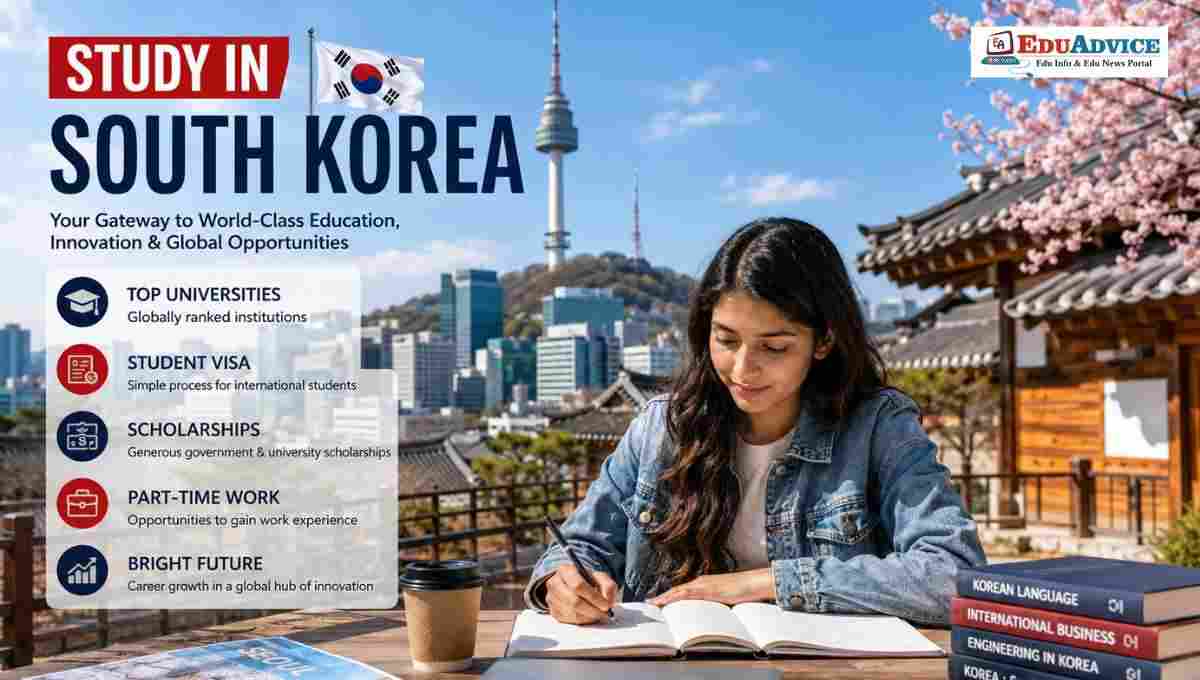
South Korea Is Emerging as a Serious Study Abroad Alternative for Indian Students
South Korea has a lot to offer Indian students as an alternative study abroad destination beyond K-pop. South Korea's highly ranked universities, advanced research facilities, strong technology industries and available scholarships give South Korea strong educational offerings. In 2025, the average annual tuition for universities was around 6.545 million KRW; national/public universities were significantly lower than private universities
The official Study in Korea platform estimates average living costs, including accommodations, food and transport, to be around KRW 750,000 to KRW 1 million per month. South Korea ticks many boxes for Indian students looking to study abroad:
- Strong technology, engineering and research sectors
- More English-medium education options
- Government and university scholarships
- Reduced average tuition in national/public universities
- Opportunity to learn Korean and work internationally
Top Universities in South Korea for Indian Students
While South Korea hosts many highly regarded universities, students should decide on their institutions based on their chosen courses and career goals, and not just the rankings.
|
University |
City |
Popular Areas |
QS World Ranking 2026 |
|---|---|---|---|
|
Seoul National University |
Seoul |
Engineering, Computer Science, Business, Sciences |
#38 |
|
Yonsei University |
Seoul |
Business, Medicine, Engineering, Social Sciences |
#50 |
|
Korea University |
Seoul |
Business, Law, Engineering, Economics |
#61 |
|
KAIST |
Daejeon |
AI, Engineering, Computer Science, Technology |
#53 |
|
POSTECH |
Pohang |
Engineering, Materials Science, Technology |
#102 |
|
Sungkyunkwan University |
Seoul |
Business, Engineering, Sciences, Pharmacy |
#126 |
|
Hanyang University |
Seoul |
Engineering, Technology, Business |
#159 |
QS World University Rankings 2026 place Seoul National University, Yonsei University, Korea University, KAIST and POSTECH among the leading universities in South Korea.
South Korea Student Visa 2026 and Cost of Education
To obtain a D 2 student visa to study at the university level, applicants are required to submit evidence of admission to a degree program, educational records, and evidence of funding, as well as additional supporting documents, based on the category and characteristics of the visa.
Data from the government puts the average annual undergraduate tuition fee at approximately KRW 6.82 million, with national and public universities averaging approximately KRW 4.27 million and private universities approximately KRW 7.63 million. The average cost of private universities is approximately KRW 7.28 million, whereas medicine is considerably greater.
Students must consider the following costs:
- Tuition and other associated fees
- Costs of living while studying
- Health insurance and means of transport
- Visa and administrative costs
In case of emergencies and for the first few months of studying overseas
The Global Korea Scholarship (GKS) is a Highly Coveted Program
In the 2026 academic year, the Korean government proposed an increase of the number of spots for international students applying for graduate degrees from 2,000 via the Embassy and University tracks, respectively.
Additionally, several universities provide academic performance-based tuition scholarships. The Study in Korea portal specifically mentions that several universities offer partial or full waivers for tuition.
Part-time Jobs Require Permission, and Korean
South Korea has limitations for international students to work. D 2 students will need to have permission from Immigration and upper-intermediate Korean. For certain part-time positions, people usually need permission to work. Current government guidelines state that eligible undergraduate students can work up to 30 hours per week and postgraduate students can work up to 35 hours per week.
Before accepting employment, students should:
- Check your work conditions
- Obtain permission to work
- Confirm the hours with the university
- Meet the Korean Language requirement
Post-Study Opportunities in South Korea
South Korea has research, manufacturing, finance and technology sectors available with opportunities for graduates. Government data shows that of the international students who remained in South Korea and planned to stay in 2025, employment was the main reason given (36.2%), followed by further studies (29.3%).
Indian students preferably do not have to learn Korean for everyday communication. South Korea could be a valuable study abroad destination. However, it is not the easiest. Students will have to compare costs, apply for scholarships, carefully research universities, and understand the overall structure of work, then they will have a successful plan.
FAQs
Q1. What kind of visa are Indian students required to study in South Korea?
Most degree students require a D 2 student visa with country specific program subcategories.
Q2. What is the average tuition in South Korea?
The 2025 tuition statistics for universities was around 6.545 million KRW. However, university and program tuition vary greatly.
Q3. What is the expected cost to live in South Korea?
The estimated cost by Study in Korea is around KRW 750,000 to KRW 1 million.
Q4. Are Indian students allowed to do part time work?
Yes, D 2 student eligibility requirements are met regarding language and immigration. Limits for part time work vary by academic level and eligibility.
Q5. Which South Korean universities should Indian students target?
They can look at Seoul National University, Yonsei University, Korea University, KAIST, POSTECH, Sungkyunkwan University, and Hanyang University.
Q6. What is the GKS scholarship?
The Global Korea Scholarship is an initiative of the Korean government for international students. The graduate program for 2026 is anticipated to have 2,000 scholarships.
Click Here for More Study In Abroad