
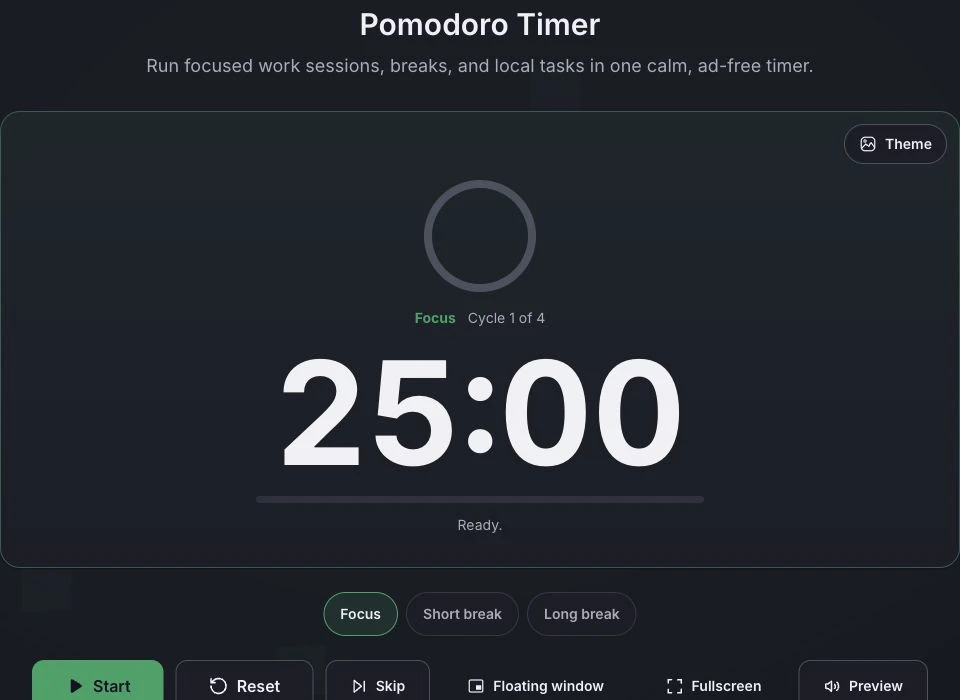
A notebook, the course syllabus and a simple timer are enough to try this approach. A browser-based toolkit such as ClockFresh offers timers and a stopwatch in one place. The tool gives a session a boundary; the student still chooses the task and checks the learning.
Turn a subject into an observable task
Before choosing a session length, write down what you intend to produce. Replace “revise chemistry” with “answer five questions on balancing equations, then check every coefficient.” Replace “study history” with “outline two possible explanations for the event and support each with examples from the course.”
The finished work should be visible: a set of answers, a paragraph, a diagram drawn from memory or a list of questions to ask a teacher. This makes it easier to distinguish working on a topic from simply keeping the textbook open.
If the task feels too large to describe in one sentence, divide it again. A whole past paper may be appropriate for a practice exam, but it can be an awkward starting point after a busy school day.
Match the study block to the work
For an initial trial, set aside 20 minutes for one manageable task. Spend the first two minutes reading the instructions and gathering the materials. Use the next 13 minutes to work without checking the answer after every line. Keep the final five minutes for marking, correcting and writing down what remains unclear.
These timings are a planning example, not a rule about how long everyone should concentrate. A short vocabulary exercise may need less time. A long calculation or essay plan may need more. Choose the duration before starting and change the next session if the estimate was unrealistic.
A countdown should help you notice the boundary, not encourage you to rush. If speed is not part of the learning objective, prioritise explaining the answer correctly.
Keep mistakes useful and specific
After checking the work, avoid writing only “bad at algebra” or “need more revision.” Identify the step that caused the problem. Perhaps a negative sign disappeared, the question asked for two examples and you supplied one, or you recognised a definition but could not explain it without looking.
A compact error log can contain three items: the question, what went wrong and one action for the next session. For example: “Confused series and parallel resistance; redraw both arrangements and solve one example of each.” That is a more useful instruction than repeating an entire chapter.
Separate learning practice from timed exam practice
During learning practice, pause to examine an unfamiliar method and ask for help when needed. During an exam rehearsal, follow the applicable paper instructions and practise completing the work within its stated time. The two activities answer different questions.
Do not assume that a personal timer is permitted in a real examination. Check the examination board and centre rules. A browser timer is a practice aid, not an official exam clock.
Make the next start easier
Finish each study session by leaving a short instruction for your future self: the page to open, the first question to attempt and the material to bring. Put the relevant worksheet or book where it will be easy to find.
After a break, use that instruction instead of redesigning the whole revision schedule. If you are tired or repeatedly stuck, reduce the task or ask a teacher which prerequisite needs attention. Adding more countdowns is not a substitute for understanding the difficulty.
Review the plan using completed work
At the end of the week, look at the answers and corrections rather than counting only minutes. Which questions can you now solve unaided? Which mistakes keep returning? Use those observations to decide the next set of tasks.
A workable revision plan does not need to fill every evening. It needs to make the next useful action clear, leave room for checking and remain realistic enough to repeat.
Click Here for More Science & Technology