
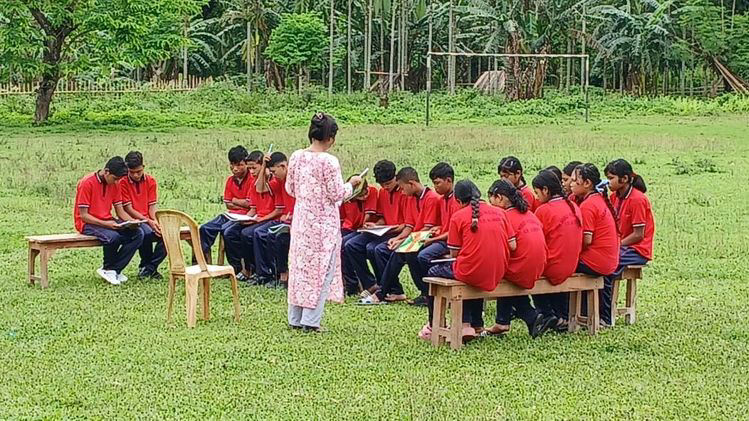
Meghalaya is placing renewed focus on transforming its rural education system, but how far can infrastructure and policy reforms bridge long standing gaps?
Chief Minister Conrad K Sangma has reaffirmed the government’s commitment to improving education infrastructure, particularly in rural and remote areas. The state is working toward upgrading school facilities, improving teacher availability, and ensuring that quality education reaches every corner of the region. At the center of this push is a large scale financial plan. The government has outlined a phased investment of nearly Rs 2000 crore to upgrade Lower Primary schools across Meghalaya. This initiative aims to modernize school infrastructure and make learning environments more accessible and effective for students. In addition to long term planning, immediate steps are also being taken. A sanction of Rs 20 lakh has been approved for infrastructure development at a higher secondary school in South West Garo Hills, reflecting a focus on both macro and micro level improvements.
However, infrastructure alone cannot drive change. Recognizing this, the government has introduced a Structured Pay Framework for fixed pay teachers. This reform is designed to create a more transparent and sustainable salary system while also providing better social security, an issue that has long affected teacher motivation and retention in rural areas. The broader goal is to create a more balanced education system where rural schools are not left behind. With many institutions located in geographically challenging regions, access to quality education has historically been uneven. Efforts to improve infrastructure and teacher support aim to reduce this disparity and build a more inclusive system. Yet the question remains. Will financial investment and structural reforms be enough to address deeper challenges such as accessibility, implementation gaps, and regional disparities?
Education has been identified as a top priority by the state leadership, with a focus on adopting a forward looking approach to bridge existing gaps. The success of these initiatives will ultimately depend on how effectively they are implemented on the ground and whether they can sustain long term improvements. As Meghalaya moves ahead with its rural education overhaul, the outcome could serve as an important model for other regions facing similar challenges.
Click Here for More Latest News