
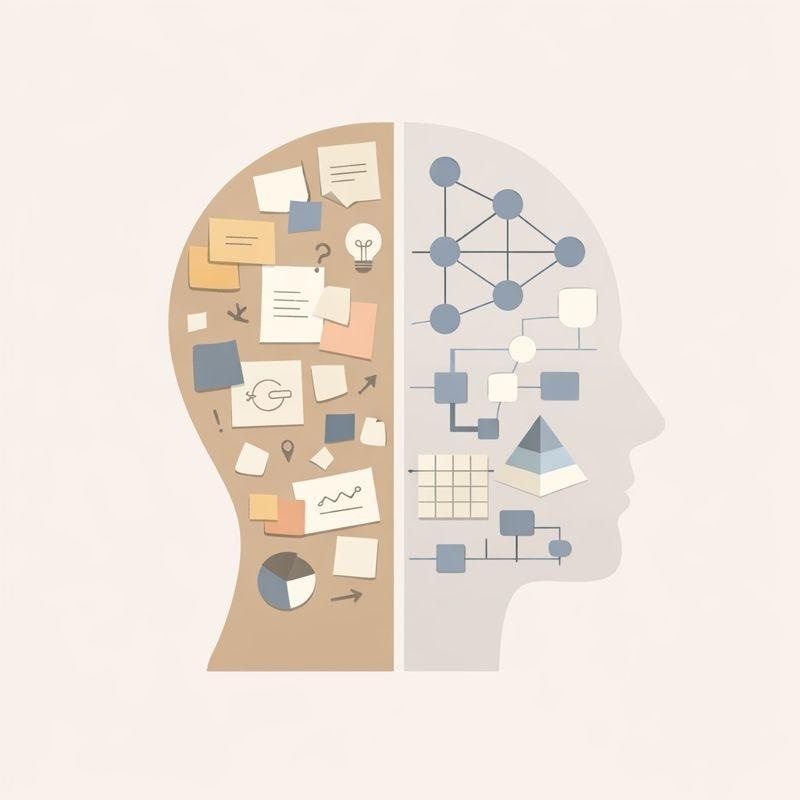
“Education is not the learning of facts, but the training of the mind to think.”
The Learning Crisis: Schooling Is Not Equal to Learning
In today’s education system, marks have become the primary measure of success, yet they often fail to reflect actual learning. India is facing a learning crisis, where students are enrolled in schools but are unable to acquire foundational skills. According to the ASER Report by Pratham, nearly 75% of Class 3 students cannot read a Class 2 text, and 74% of Class 5 students struggle with basic division. This clearly shows that while students are progressing through grades and scoring marks, their conceptual understanding remains weak. The system, therefore, is not measuring learning—it is measuring the ability to retain and reproduce information.
Rote Learning Dominates Classrooms
A major reason behind this gap is the dominance of rote learning, deeply rooted in the colonial education system introduced by the British. This model was designed to create individuals suited for administrative and clerical roles, rather than thinkers, innovators, or entrepreneurs. As a result, memorization became central to education, and over time, students adapted to a system where success depends on recalling information rather than understanding it. Even today, classrooms are driven by the question, “What will come in the exam?” instead of “What should be understood?”, limiting curiosity and critical thinking.
Credentials Without Competence
The overemphasis on marks has created a system where credentials do not reflect competence. Insights from NITI Aayog suggest that educational certificates often represent years spent in schooling rather than actual skills or employability. This results in a paradox where students graduate with high marks but struggle to apply knowledge in real-life situations. Marks become a certificate of completion, not capability, weakening the link between education and real-world performance.
Enrollment Success but Learning Failure
India has achieved near-universal enrollment, which is a significant milestone. However, this success masks a deeper issue—poor learning outcomes. While access to education has improved, quality of learning has not kept pace. Studies consistently indicate that students are attending school but are not learning at expected levels. This reflects a system where attendance is prioritized over understanding, further widening the gap between marks and meaningful education.
Exam-Centric System Distorts Learning
The exam-centric structure of education reinforces this issue. Students are conditioned to optimize for marks, leading to coaching culture, surface-level preparation, and fear-driven learning. Instead of engaging deeply with concepts, students focus on predicted questions and answer patterns. In such a system, marks become an indicator of short-term memory, rather than long-term understanding or intellectual growth.
Disruptive Learning and the Need for Change
Indian thinkers like Mahatma Gandhi strongly opposed rote-based education and advocated for “Nai Talim”, a model centered on learning by doing, practical knowledge, and holistic development. Gandhi emphasized that education should create individuals who are self-reliant, innovative, and socially responsible, not merely exam-qualified. This vision directly challenges the current system and highlights the need to move toward experiential and skill-based learning that aligns with real-world demands.
Policy Recognition of the Problem
The issue is not unrecognized. The Supreme Court in Unnikrishnan J.P. vs State of Andhra Pradesh (1993) emphasized that education is integral to the right to life under Article 21, underscoring that education must go beyond certification to enable meaningful development. Additionally, the National Education Policy (NEP) 2020 calls for a shift from rote learning to conceptual understanding, critical thinking, and competency-based assessments. Reports by organizations such as ASER (Pratham) and policy discussions by NITI Aayog further reinforce that current evaluation systems fail to capture real learning outcomes. Together, these recommendations highlight the urgent need to redesign assessment systems.
Marks vs Meaning: The Core Debate
At its core, the debate is about what we value in education. Marks are quantifiable, comparable, and easy to standardize, but learning is complex, dynamic, and deeply individual. When education systems prioritize marks over meaning, they risk producing individuals who may perform well in exams but lack the ability to think independently, solve problems, or innovate. Marks are merely a certificate, whereas real learning is what builds entrepreneurs, leaders, and creators. The challenge lies in ensuring that marks reflect understanding, not memorization.
Conclusion
The future of education depends on shifting from a marks-driven system to a learning-driven system. This does not mean eliminating evaluation, but redefining it to include application, creativity, and critical thinking. As India moves toward becoming a knowledge economy, it is essential to ensure that students are not just prepared for exams, but for life. The central question remains: are we preparing students to score marks, or to create meaning?
A student once scored 98% in science. Yet when asked, “Why does the sky appear blue?”, he paused. He had memorized the answer, written it perfectly in exams, and earned top marks. But in that moment, he realized:
he knew the answer—but didn’t understand it.
That is the difference between marks and meaning.
Click Here for More Students Corner