
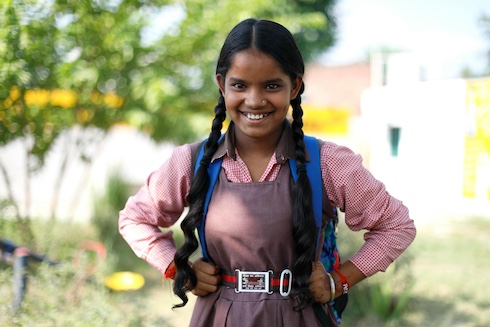
“Education is the most powerful weapon which you can use to change the world.”
Education was envisioned as the great equalizer of society — a bridge that could reduce poverty, caste divisions, and economic inequality. Yet in contemporary India, schooling itself is becoming layered and unequal. A silent divide is emerging between children studying in elite private schools and those dependent on government schools. What was once a constitutional promise of equal opportunity is increasingly transforming into a marketplace where quality education is determined by purchasing power.
Today, a child’s school often determines not only their academic future, but also their social exposure, language confidence, digital access, employment opportunities, and eventually their position in society. This educational divide is gradually becoming a social divide.
The Supreme Court of India, in the landmark T.M.A Pai Foundation vs State of Karnataka (2002) and Unnikrishnan vs State of Andhra Pradesh (1993), warned against the commercialization of education and emphasized that education cannot be reduced purely to a profit-making enterprise. The Court observed that while private institutions may generate a reasonable surplus, “profiteering” and capitation fees violate the spirit of education. (Centre for Civil Society)
Similarly, the Right to Education Act (2009) sought to ensure equitable access to quality schooling, recognizing education as a constitutional right under Article 21A.
However, despite constitutional guarantees, the gap between public and private education continues to widen.
The Rise of Education as a Marketplace
India has witnessed a dramatic rise in private schooling over the last two decades. Parents increasingly perceive private schools as symbols of better English proficiency, discipline, infrastructure, and career opportunities. This perception has pushed even economically vulnerable families toward costly private education.
According to the Annual Status of Education Report (ASER), private school enrollment in rural India increased significantly over the years as parents lost confidence in government schooling. (ASER Centre)
This trend is not limited to urban elites. Even low-income families are spending large portions of their income on private school fees, transportation, uniforms, coaching, and digital learning subscriptions.
A 2025 government survey reported that nearly one in three students in India now depends on private coaching, revealing how education has expanded into a parallel commercial ecosystem beyond schools themselves. (Times of India)
Education is no longer merely a social service; it is increasingly becoming an industry.
Unequal Learning Outcomes and the Foundation Gap
One of the strongest arguments parents make in favor of private schools is learning quality. Multiple studies reveal a significant learning gap between many government and private schools.
The NCERT PARAKH survey in Noida found a 16% learning gap between government and private school students, with private school students scoring 76% compared to 60% among government school students. (Times of India)
Similarly, ASER reports have repeatedly highlighted foundational learning challenges in public schools. A 2024 analysis noted that only 23.4% of Class 3 government school students could read a Class 2-level text fluently. (Drishti IAS Analysis based on ASER)
These are not merely statistics. They represent millions of children entering higher classes without foundational literacy and numeracy. A weak educational foundation eventually impacts higher education participation, employability, and income generation.
When one section of society receives advanced exposure to technology, communication skills, and conceptual learning while another struggles with basic reading ability, inequality becomes institutionalized.
The Invisible Reproduction of Social Hierarchies
India’s educational divide is not just economic — it is deeply social.
Historically marginalized communities, including Scheduled Castes, Scheduled Tribes, and economically weaker sections, are disproportionately dependent on government schools. Meanwhile, affluent families increasingly cluster in private institutions that offer superior infrastructure, English-medium education, global curricula, and digital exposure.
This creates a layered society where children grow up in separate educational ecosystems with limited interaction across class backgrounds.
Sociologists often describe schools as spaces where societies reproduce themselves. In India, the danger is that schooling may begin reproducing caste and class divisions in a modern form.
Earlier, caste determined social mobility. Today, the type of school attended increasingly shapes future opportunity. The divide may appear educational on the surface, but its consequences are social, economic, and psychological.
A child studying in an under-resourced rural government school often competes in the same labor market as a child trained in technologically advanced private institutions. Yet both begin the race from entirely different starting lines.
Out-of-Pocket Expenditure and the Burden on Families
One of the most troubling aspects of this divide is the financial pressure on ordinary households.
Parents increasingly spend beyond their means because of fear — fear that government schools may not provide quality education or future opportunities.
A recent education expenditure survey highlighted that urban families spend nearly nine times more on education compared to rural government-school households. (Times of India)
For many poor families, private schooling leads to debt, reduction in household savings, and sacrifices in nutrition or healthcare expenditure.
Ironically, citizens already pay taxes intended to support public education. Yet due to declining trust in public schools, families are forced into additional private spending. This creates a double burden:
-
Tax-funded public education systems
-
Personal expenditure on private alternatives
If government schools offered consistently high-quality education, families would not feel compelled to spend excessively on private institutions.
Commercialization and the Fee Regulation Debate
The rapid expansion of private education has also intensified debates around fee regulation.
Several Supreme Court judgments have acknowledged that education cannot become a purely profit-driven enterprise. (Legal Services India) Yet fee hikes, hidden charges, mandatory coaching tie-ups, and expensive school requirements continue to burden parents.
Recent legal disputes in Delhi over private school fee regulation again highlighted the tension between institutional autonomy and public accountability. (Times of India)
The issue is not whether private schools should exist. Many private institutions provide excellent education and innovation. The real question is whether quality education should depend primarily on affordability.
When education becomes excessively commercialized, it risks excluding deserving students and widening inequality.
The Employment Divide of Tomorrow
Educational inequality eventually transforms into employment inequality.
Students from elite private schools often gain:
-
Better English communication skills
-
Stronger digital literacy
-
Exposure to extracurricular development
-
Better networking opportunities
-
Greater confidence in interviews and professional settings
Meanwhile, many government-school students continue to struggle with foundational gaps, inadequate infrastructure, teacher shortages, and limited career counseling.
This unequal preparation eventually reflects in:
-
Competitive examinations
-
Higher education admissions
-
Corporate recruitment
-
Professional salaries
Thus, the school divide of today can become the unemployment divide of tomorrow.
A nation cannot achieve a demographic dividend when millions of children are denied equal educational foundations.
The Real Solution: Strengthening Public Education
The answer is not eliminating private schools. The answer is rebuilding confidence in public education.
Countries with strong public school systems — such as Finland and several East Asian nations — demonstrate that when government schools provide high-quality education, social trust in public institutions increases naturally.
India must focus on:
-
Modernizing government school infrastructure
-
Improving teacher training
-
Ensuring digital access
-
Strengthening foundational literacy and numeracy
-
Introducing experiential and skill-based learning
-
Reducing bureaucratic inefficiencies in education governance
The success stories already exist. States that invested seriously in school infrastructure, teacher accountability, and learning outcomes have shown measurable improvement. (Times of India)
When public schools become genuinely competitive in quality, families will no longer feel forced into excessive private expenditure.
Education Must Unite, Not Divide
The greatest danger of educational inequality is not simply poor learning outcomes — it is the creation of separate social realities for children.
One child grows up believing the world is full of opportunities, innovation, and confidence. Another grows up internalizing limitation, scarcity, and exclusion.
No democracy can remain socially stable when access to quality education depends on wealth.
Education should function as a ladder of mobility, not a wall of separation.
A nation is not divided only by caste, religion, or wealth.
Sometimes, it is divided quietly — classroom by classroom.
When one child studies in digitally equipped campuses with global exposure while another struggles for basic literacy in an underfunded school, inequality becomes normalized. The divide between private and public education is no longer just about schools; it is about the future shape of Indian society itself.
If India truly wishes to become an inclusive and developed nation, quality education cannot remain a privilege purchased by a few. It must become a guarantee experienced by all.
Click Here for More Educational Column