
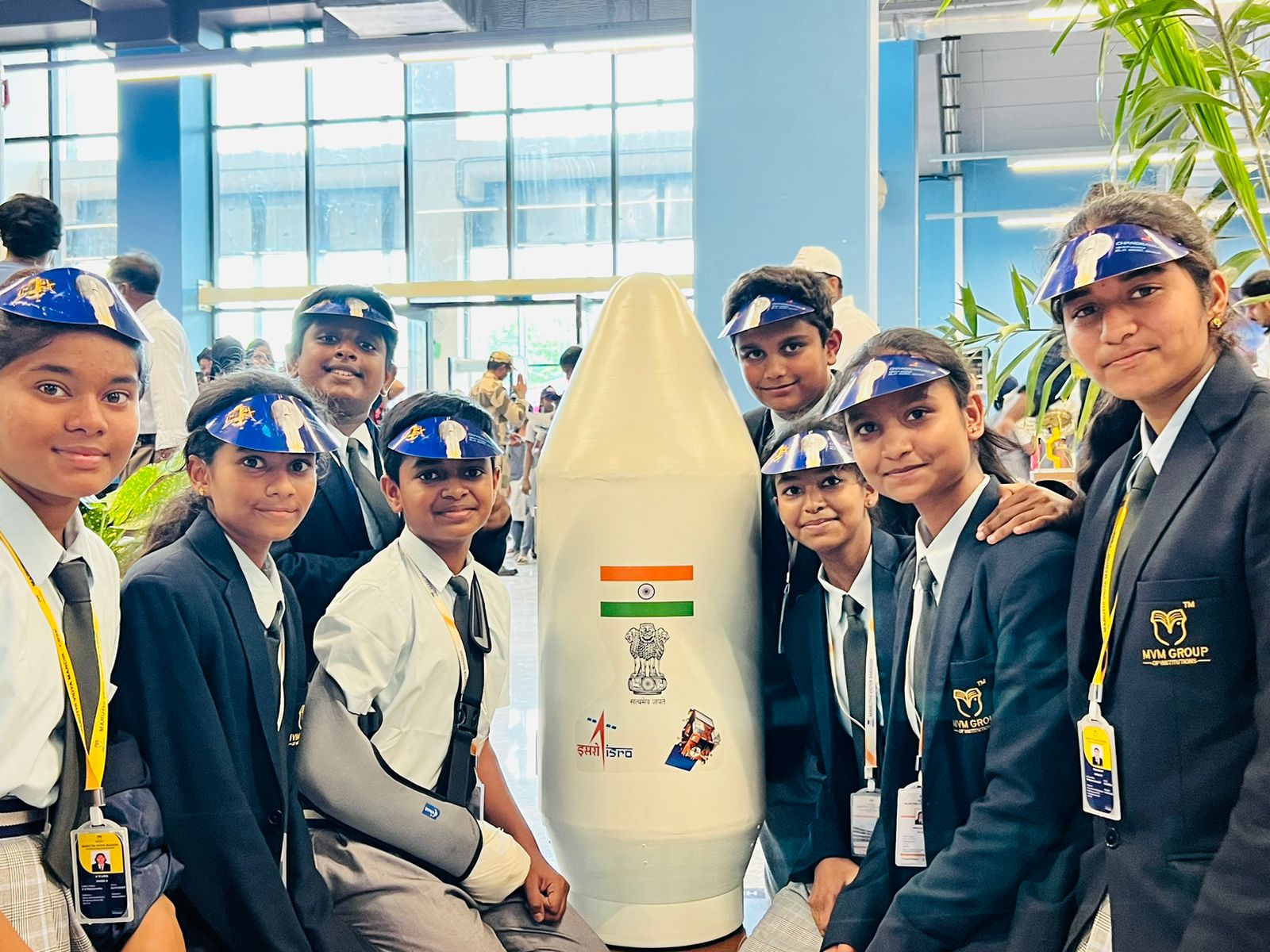
In a major step toward strengthening STEM education among island students, the Lakshadweep Administration recently organised its first ever scientific educational study tour to Sriharikota, giving selected students a rare opportunity to witness India’s space ecosystem up close. The initiative was conducted by the Department of Science and Technology in association with the Lakshadweep Astronomy Club. Twenty one students from different schools across the islands were selected through an online aptitude test that assessed astronomy knowledge, scientific reasoning, analytical ability, and technical awareness.
As part of the tour, students visited the Satish Dhawan Space Centre in Sriharikota, India’s primary space launch facility operated by the Indian Space Research Organisation. During the visit, students learned about launch pads, rocket assembly systems, propulsion technology, mission integration facilities, and satellite operations. Officials involved in the program said the larger objective was to cultivate scientific curiosity and expose students from geographically isolated regions to advanced scientific infrastructure and research environments. For many participants, the visit marked their first direct interaction with real world applications of aerospace science and modern technology.
The students were also introduced to concepts such as orbital mechanics, cryogenic propulsion, remote sensing satellites, and launch vehicle sequencing. Scientists and officials at the space center reportedly interacted with the group and explained the significance of Sriharikota in India’s growing space ambitions. Beyond ISRO, the study tour included visits to the Government Museum Chennai, the Tamil Nadu Science and Technology Centre, and the M P Birla Planetarium, helping students gain broader exposure to science communication and innovation based learning.
Education observers believe such initiatives can play an important role in encouraging students from remote regions to pursue careers in science, engineering, research, and technology. Exposure based learning experiences are increasingly being viewed as essential in helping students connect classroom concepts with practical applications. The Lakshadweep Administration described the program as a milestone in promoting scientific education across the islands. For the participating students, the tour offered more than just a visit to a national facility. It became a glimpse into future possibilities within India’s rapidly expanding scientific and technological landscape.
Click Here for More Latest News