
International E-Waste Day 2026: How DoSEL Is Turning Electronic Waste into a Message of Sustainability
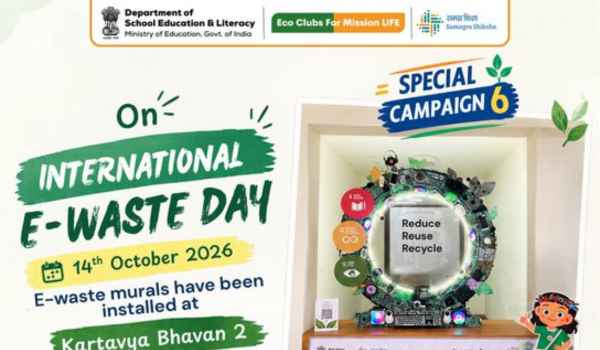
New Delhi: Old chargers, damaged electronic accessories and unused devices often end up forgotten in drawers or thrown away with regular rubbish. But electronic waste can pose environmental challenges when it is not handled properly. Turning discarded electronics into creative displays offers a way to bring this issue into public view. To mark International E-Waste Day on October 14, 2026, the Department of School Education and Literacy (DoSEL) installed creative e-waste murals and collection bins at Kartavya Bhavan 2 in New Delhi. The initiative was carried out under Special Campaign 6 and is aligned with the environmental goals of the National Education Policy (NEP) 2020 and Eco Clubs for Mission LiFE.
According to DoSEL's announcement, the murals feature electronic waste collected by school students and transform it into creative displays. The initiative aims to encourage people to think differently about discarded electronics and recognise the role responsible waste management plays in protecting the environment.
DoSEL's E-Waste Murals at Kartavya Bhavan 2: What Is the Initiative About?
The installation combines creative artwork with e-waste collection bins to highlight the importance of responsible disposal. Instead of treating electronic waste solely as a problem, the murals use discarded materials to start a conversation about recycling, reuse and sustainable consumption. School students have a central role in the initiative, as the materials used in the displays were collected by them.
This involvement connects environmental awareness with practical experience, helping students understand what happens to electronic items when they are no longer useful. The collection bins installed alongside the murals reinforce the need to keep electronic waste separate from ordinary rubbish. However, DoSEL's announcement does not specify which devices the bins accept, how often they are emptied or what arrangements are in place for subsequent recycling. These details have not been confirmed in the available information.
Why International E-Waste Day Matters for Students and Citizens
International E-Waste Day is observed every year on October 14 to raise awareness about electronic waste and encourage responsible handling of discarded electrical and electronic equipment. As the use of electronic devices continues across homes, schools and workplaces, unwanted equipment can accumulate quickly. Old phones, broken chargers, damaged computers and other electronic items need appropriate collection and disposal rather than being treated like ordinary household rubbish.
Some electronic products contain materials that require careful handling, while others contain valuable resources that can be recovered through suitable recycling processes. Proper collection and processing help reduce environmental risks and make better use of these materials.
For students, e-waste provides a practical example of how everyday choices affect the environment. Discussions about pollution, resource conservation and sustainable consumption become more meaningful when connected to familiar objects and habits. DoSEL's initiative brings these issues into a public setting through student-collected materials and creative displays. The announcement does not provide figures on the amount of e-waste collected, the number of participating schools or the volume ultimately recycled. Its stated focus is on awareness and encouraging responsible habits.
Link with NEP 2020 and Eco Clubs for Mission LiFE
DoSEL has linked the initiative with the vision of NEP 2020 and Eco Clubs for Mission LiFE, connecting environmental awareness with broader educational and sustainability goals. NEP 2020 provides a framework for learning that extends beyond memorising information. Activities involving waste collection, recycling and environmental awareness can help students connect classroom discussions with challenges they encounter in everyday life.
Eco Clubs for Mission LiFE provide another avenue for students to engage with sustainable practices. Activities such as waste segregation, environmental campaigns and responsible disposal can encourage young people to think about how their daily decisions affect the environment. The initiative was also undertaken under Special Campaign 6. However, the available announcement does not outline a detailed implementation plan or list other e-waste management activities conducted under the campaign.
What Students Can Learn from the E-Waste Initiative
The familiar principle of Reduce, Reuse and Recycle offers a practical starting point for students who want to manage electronic waste more responsibly.
- Reduce: Avoid unnecessary electronic purchases and take care of devices so they last longer.
- Reuse: Repair or repurpose usable electronics where practical, or pass working devices on to someone who can use them.
- Recycle: Send unusable electronic items through authorised collection and recycling channels.
- Segregate: Keep e-waste separate from regular household rubbish and follow local disposal guidelines.
- Spread awareness: Encourage friends and family members to learn how unwanted electronics can be collected and processed responsibly.
Students should not dismantle electronic devices themselves or handle damaged batteries without appropriate guidance. Batteries and other components may require specialised handling, making proper collection and professional processing essential.
A Public Reminder for a Cleaner, Greener Future
The e-waste murals and collection bins at Kartavya Bhavan 2 give environmental awareness a visible presence in New Delhi. By incorporating materials collected by school students, DoSEL has used a creative approach to draw attention to the challenges associated with discarded electronics. The initiative's longer-term impact will depend on whether awareness leads to regular collection, safe disposal and appropriate recycling.
Schools and households can contribute by extending the life of electronic devices, avoiding unnecessary purchases and using suitable disposal channels when equipment can no longer be used. International E-Waste Day 2026 provides an opportunity to reflect on these everyday choices. The message behind DoSEL's installation is straightforward: responsible electronic waste management begins with individual habits, and schools can help young people turn environmental awareness into practical action.
FAQs
1. When is International E-Waste Day observed?
International E-Waste Day is observed annually on October 14. In 2026, it was marked on October 14.
2. What did DoSEL do for International E-Waste Day 2026?
The Department of School Education and Literacy installed creative e-waste murals and collection bins at Kartavya Bhavan 2 in New Delhi under Special Campaign 6.
3. What do the e-waste murals at Kartavya Bhavan 2 represent?
According to DoSEL's announcement, the murals use e-waste collected by school students to create displays that promote environmental awareness and responsible waste management.
4. How is the initiative connected with NEP 2020?
DoSEL has aligned the initiative with the vision of NEP 2020, linking environmental awareness with student participation and practical lessons about sustainability.
5. What is the role of Eco Clubs for Mission LiFE in this initiative?
The initiative is aligned with Eco Clubs for Mission LiFE, which provides a setting for students to engage with environmental awareness and sustainable practices.
6. Why should electronic waste be separated from regular rubbish?
Some electronic items contain materials that require careful handling, while suitable recycling processes can recover useful resources. Separating e-waste helps direct it towards appropriate collection and processing channels.
7. What does Reduce, Reuse and Recycle mean for e-waste?
It means buying electronics only when needed, extending the life of usable devices through repair or reuse, and sending unusable equipment to authorised collection and recycling facilities.
8. Where were the e-waste murals and bins installed?
The installation was reported at Kartavya Bhavan 2 in New Delhi. Further details about public access and the collection bins' operating arrangements have not been specified in the available announcement.
Click Here for More Latest News