
-
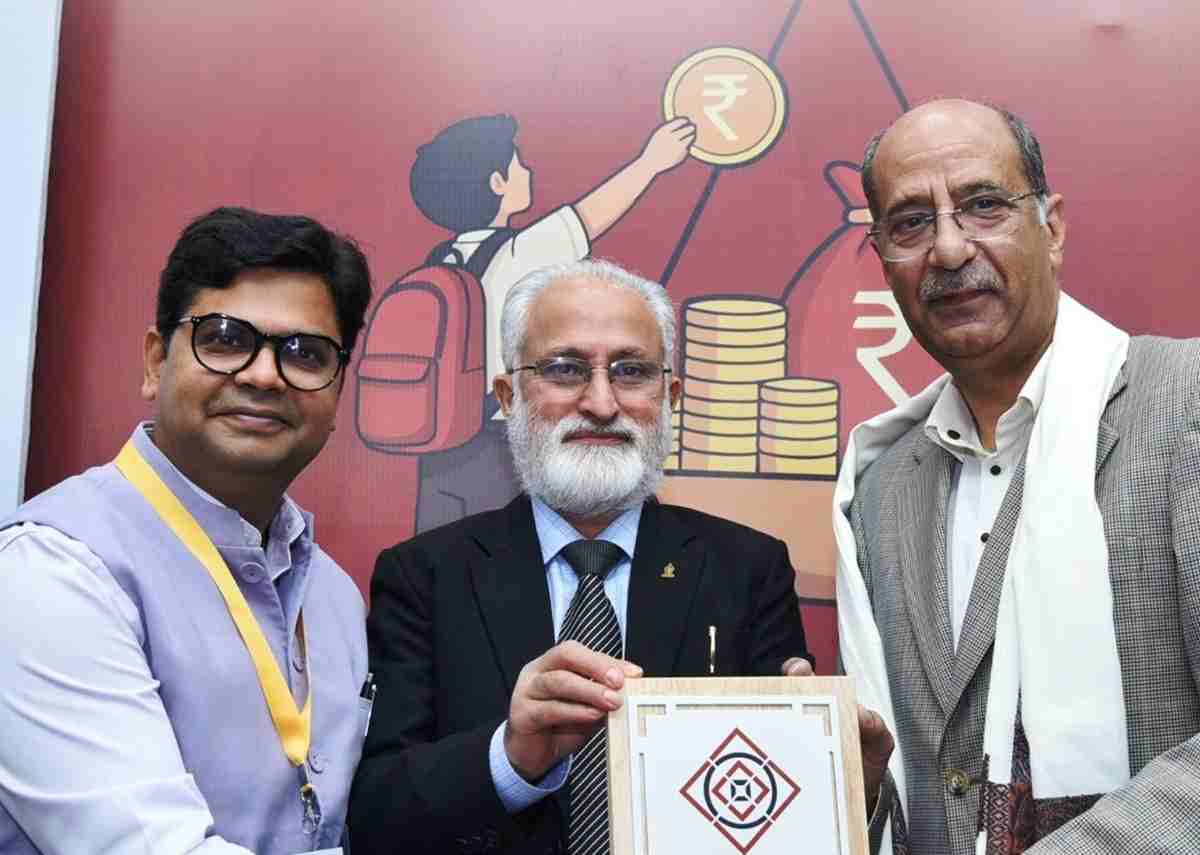
Centre for Civil Society releases an Economics of Education compendium featuring research by 22 young scholars at the 13th School Choice National Conference 2026 in New Delhi.
NEW DELHI: India needs to move beyond measuring education expenditure through infrastructure and other inputs and focus more on actual student learning outcomes, experts said at the 13th School Choice National Conference (SCNC 2026), organised by the Centre for Civil Society (CCS) in New Delhi.
The conference, held at the FICCI Auditorium under the theme “Economics of Education,” brought together policymakers, academics, researchers and education leaders to discuss the relationship between public education spending, school performance and learning outcomes.
A key highlight was the launch of a special “Economics of Education” compendium, featuring research contributions from 22 young scholars.
India’s Education Spending and Learning Outcomes
Discussions at the conference focused on the gap between the expansion of India's school education system and improvements in student learning.
According to figures cited at the conference, India has 24.7 crore students enrolled across 14.7 lakh schools, as reported in UDISE+ 2025-26. Public education budgets have increased 5.5 times over two decades.
However, learning outcomes remain a concern. ASER reading proficiency data cited at the conference showed that the proportion of rural Class V students able to read a Class II-level text declined from 53.1% in 2006 to 48.7% in 2024.
The figures formed the basis of discussions on whether education funding should focus more directly on learning achievement, institutional efficiency and the needs of individual students.
Education Spending Must Focus on Outcomes: Vumlunmang Vualnam
Vumlunmang Vualnam, IAS, Secretary of the Department of Expenditure, highlighted the need to evaluate the results achieved through public expenditure.
He said, “How do we improve the outcomes from the focus on just inputs, and even going beyond outputs to the outcomes, is something we have to discuss.”
His remarks emphasised the importance of assessing the effectiveness of education spending beyond the availability of school infrastructure and resources.
Employability and School Resource Allocation
Nasir Aslam Wani, Advisor to the Chief Minister of Jammu and Kashmir, stressed that education should prepare students not only to become educated but also to become employable.
He observed that expenditure on school buildings alone was not sufficient and pointed to disparities in the distribution of teachers across schools. According to him, some schools have many teachers but few students, while others have students but insufficient teachers.
The discussion highlighted the importance of better resource allocation and connecting education with employment-related skills.
CCS Calls for Equitable and Outcome-Based Education Funding
Dr Amit Chandra, CEO of the Centre for Civil Society, said that public spending had played an important role in expanding elementary school enrolment. However, falling fertility rates and persistent learning challenges make it necessary to reconsider how education resources are allocated and evaluated.
He advocated a funding approach that provides a basic allocation for every child, supplemented by additional equity-based funding for students who need greater support, including children with disabilities.
The discussion emphasised a shift from monitoring infrastructure and other inputs towards measuring educational outcomes and ensuring that public resources address the differing needs of students.
Student First Dialogue and Expert Discussions
A special ‘Student First Dialogue’ was held between Sanjay Kumar, former Secretary of the Department of School Education and Literacy, and author Gurcharan Das.
The conference also featured discussions involving policymakers, researchers, academics and education-sector representatives, including:
-
Lt. Col. Jitendra Verma, NITI Aayog
-
Prof. Saumen Chattopadhyay, Jawaharlal Nehru University
-
Dr. Mridusmita Bordoloi, Centre for Social and Economic Progress
-
Meeta Sengupta, author and educationist
-
Dr. Sarath Davala, Basic Income Earth Network
-
Damodar Goyal, President, Society for Unaided Private Schools, Rajasthan
-
Dr. Arpan Tulsyan, Observer Research Foundation
-
Rahul Agarwal, Alliance for Re-Imagining School Education
-
Dr. Parth J. Shah, Founder President, Centre for Civil Society
-
Dr. Annie Koshi, Principal, St. Mary's School
-
Dr. Kulbhushan Sharma, President, National Independent School Alliance
-
Kavish Gadia, CEO, Excel One
-
Rahul Ahluwalia, Director, Foundation for Economic Development
Their participation brought perspectives from public policy, school leadership, research, education finance and private school management.
Compendium by 22 Young Scholars Launched
The launch of the Economics of Education compendium was a central feature of SCNC 2026. Authored by 22 young scholars, the publication brings youth-led research and fresh policy perspectives into discussions on India's education system.
The conference highlighted the need to connect education expenditure with measurable improvements in student learning, equitable access to resources and the development of skills relevant to the changing world of work.
The discussions also pointed to the importance of ensuring that funding decisions reflect the needs of students rather than relying only on traditional measures of school infrastructure and expenditure.
FAQs
1. What was the theme of the 13th School Choice National Conference 2026?
The theme was “Economics of Education”, focusing on education financing, resource allocation and student learning outcomes.
2. Who organised the School Choice National Conference 2026?
The conference was organised by the Centre for Civil Society (CCS) at the FICCI Auditorium in New Delhi.
3. What was launched during the conference?
CCS launched an Economics of Education compendium featuring research by 22 young scholars.
4. What did experts say about India's education financing?
Experts highlighted the need to move beyond infrastructure and other input-based spending measures and focus more on measurable student learning outcomes.
5. What education funding approach did Dr Amit Chandra suggest?
He proposed basic funding for every child, with additional equity-based funding for students requiring greater support, including children with disabilities.
6. What learning outcome figures were discussed?
ASER reading proficiency data cited at the conference showed that the share of rural Class V students able to read a Class II-level text declined from 53.1% in 2006 to 48.7% in 2024.
7. Who participated in the conference?
Policymakers, academics, researchers, school leaders and education-sector representatives participated, including Vumlunmang Vualnam, Nasir Aslam Wani, Dr Amit Chandra and several other experts.
Click Here for More Latest News