
Himachal Pradesh; November 20, 2026: Researchers at the Indian Institute of Technology (IIT) Mandi have developed a new mathematical modelling framework that uses artificial intelligence (AI) techniques to predict changes in wildlife populations. The model can help scientists understand how predator and prey populations influence each other and forecast their future numbers, even when the available data is limited or irregular.
The research focuses on the wolf and moose populations of Isle Royale National Park, a 544-square-kilometre island in Lake Superior, Michigan, USA. Wolves are the primary natural predators of moose in the park, with moose accounting for nearly 90% of the wolves' winter diet. Their populations have been monitored annually since 1959, making this one of the world's longest-running records of predator-prey populations. Over the decades, both populations have witnessed significant ups and downs. For instance, wolf numbers declined sharply in the early 1980s following a disease outbreak, while the moose population experienced a major decline in the mid-1990s. Understanding such changes is important because an imbalance between predators and prey can affect the health of an entire ecosystem.
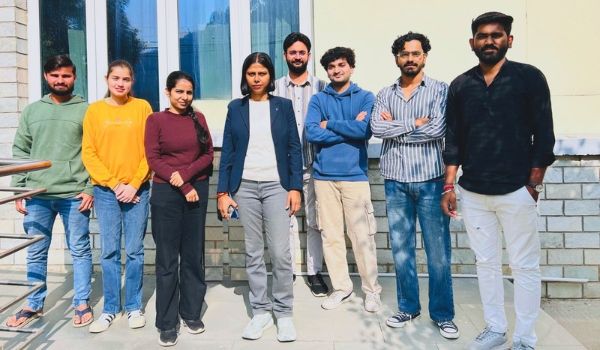
The research has been conducted by Dr Nitu Kumari, Professor at the School of Mathematical and Statistical Sciences, along with her PhD student, Mr Anurag Singh. The researchers developed a model that uses historical population data to estimate how quickly moose reproduce, how wolf populations change naturally, and how predation affects the number of moose. Using these estimates, the model can forecast population trends for up to five years.
The researchers tested two different approaches to understand how wolves hunt moose. Their findings showed that the model based on the relationship between predator and prey numbers performed better than the alternative approach. It also successfully identified periods of unusual population decline in the historical data. For the period between 2020 and 2024, the model predicted an increase in wolf numbers and a decline in moose numbers, broadly matching the population trends subsequently observed in the park.
According to Prof. Kumari, this is the first study, to the best of her knowledge, to use a self-adaptive mathematical modelling framework combining physics-informed neural networks and transfer learning to study predator-prey population fluctuations. The findings demonstrate how AI-assisted mathematical models can help scientists make meaningful predictions even when environmental data is limited and contains uncertainties.The research has also attracted international media attention. Prof. Kumari recently gave an interview to US-based news outlet The Primary, whose article on the research is expected to be published online soon.
FAQs
1. What have IIT Mandi researchers developed?
A team from IIT Mandi created an AI-based mathematical modeling tool to forecast changes in wildlife population and analyze predator-prey relationships.
2. Who conducted the IIT Mandi wildlife population research?
The research was conducted by Dr. Nitu Kumari, Associate Professor, School of Mathematical and Statistical Sciences, IIT Mandi, and her PhD scholar, Anurag Singh.
3. How far into the future can the AI model forecast wildlife population changes?
The framework can project wildlife population trends for the next five years, utilizing available historical data.
4. What animals were studied in the research?
The research studied the wolf and moose populations in Isle Royale National Park, Michigan, USA.
5. What kind of AI technologies are used in the wildlife prediction model?
The model uses Physics-Informed Neural Networks (PINNs) along with self-adaptive mathematical modeling and transfer learning.
6. What did the model predict for the wolf and moose populations from 2020 to 2024?
The model predicted an increase in the number of wolves and a decrease in the number of moose. The broad trends predicted by the model were aligned with changes in the moose and wolf populations of Isle Royale National Park, as provided in IIT Mandi’s research information.
7. Why is this wolf and moose population study important?
Wolves, being the primary natural predators of moose, change the island’s predator-prey balance. This further impacts the ecosystem of Isle Royale National Park.
Click Here for More Institutional Activities