
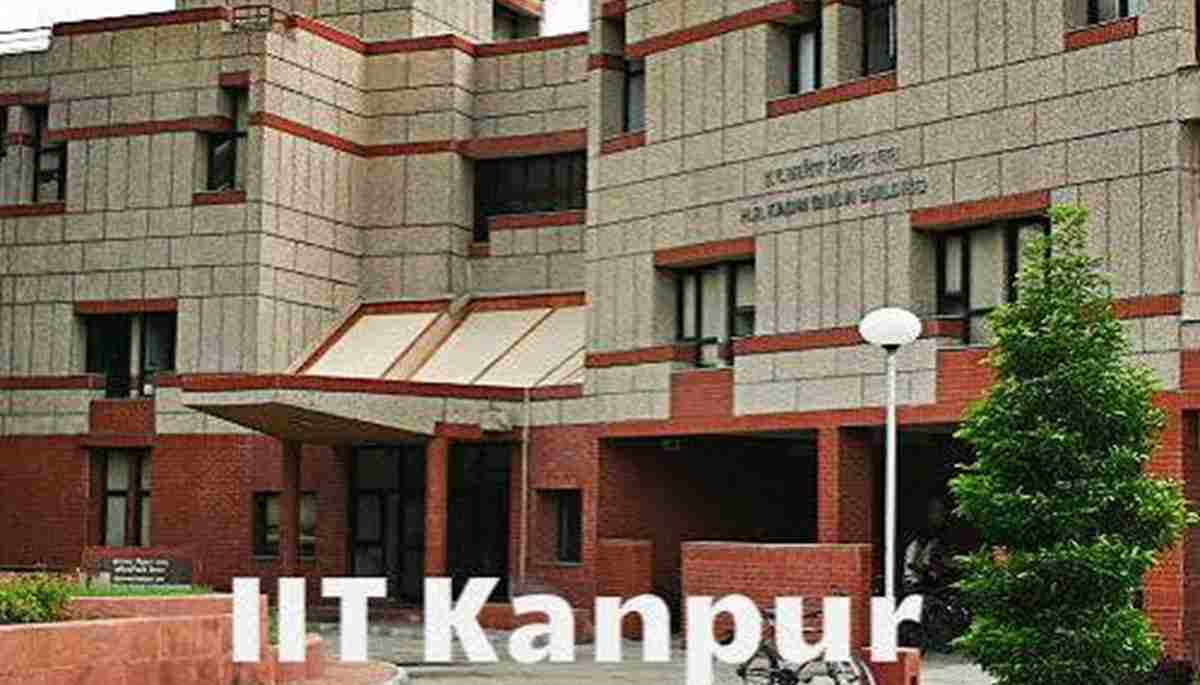
Kanpur, As a suffocating blanket of winter smog once again engulfs the National Capital Region, the Indian Institute of Technology (IIT) Kanpur has put its atmospheric research team and specialized aircraft on standby to carry out another round of cloud-seeding operations over New Delhi. With the Air Quality Index (AQI) crossing the 400 mark into the "Severe" category at vital hubs such as AIIMS (417–418) and the Rajokri Border (402), millions of residents—from morning commuters and outdoor wage earners to schoolchildren and elderly citizens—are grappling with stinging eyes, breathlessness, and heightened respiratory distress. In response to the deepening public health emergency, government authorities and IIT Kanpur scientists have completed all ground preparations, awaiting only a favorable window in the sky to chart their final flight paths and launch the sortie.
At the center of this intervention is a premier academic institution translating laboratory meteorology into urgent civic relief. Founded in 1959 as one of India's first Indian Institutes of Technology, IIT Kanpur has spent recent years developing indigenous aerial weather-modification capabilities, equipping modified aircraft with pyrotechnic flares mounted beneath their wings. When ignited inside suitable cloud formations, each 2 to 2.5-kilogram flare disperses hygroscopic and ice-nucleating agents—such as silver iodide, potassium iodide, and sodium chloride—over a two-minute burn window. These microscopic salt particles act as artificial cloud condensation nuclei, attracting ambient water vapor so that tiny cloud droplets collide, grow heavy, and fall as rain. As raindrops descend through the polluted boundary layer, a natural physical process known as coagulation allows each droplet to capture hundreds of suspended PM2.5 and PM10 aerosol particles, effectively scrubbing soot and sulfates from the air people breathe.
However, the human tension behind this week's standby operation lies in the delicate boundary between technological readiness and nature's cooperation. Both scientists and citizens carry the memory of the pilot trials conducted on October 28, 2025, when two sorties over Burari, Karol Bagh, and Mayur Vihar released eight flares into clouds holding just 15 to 20 percent humidity. Because those winter formations were too thin and dry, the capital recorded zero rainfall, while neighboring Noida and Greater Noida saw a negligible 0.1 mm to 0.2 mm drizzle. Learning from that setback, IIT Kanpur officials and Delhi Environment Minister Manjinder Singh Sirsa have emphasized that the current aircraft will not take off into dry, stagnant skies simply for optics. Instead, meteorologists are monitoring an approaching western disturbance originating from the Mediterranean region, waiting for deep, moisture-laden convective clouds before authorizing takeoff.
Beyond the immediate mechanics of the flight, the operation highlights a broader policy conversation among environmental scientists and urban planners. While a successful downpour could offer Delhi residents a desperately needed 48-to-72-hour breathing reprieve from toxic smog, atmospheric experts caution that artificial rain remains an emergency tactical intervention rather than a substitute for year-round source control. Curbing vehicular emissions, industrial pollutants, construction dust, and regional biomass burning remains essential to permanently healing the capital's airshed. For students, researchers, and aspiring engineers across India, IIT Kanpur's ongoing mission serves as a compelling case study in how applied academic research is increasingly called upon to confront complex, real-time environmental crises—while reminding policymakers that technological innovation works best when paired with sustainable ground-level governance.
Click Here for More Latest News