
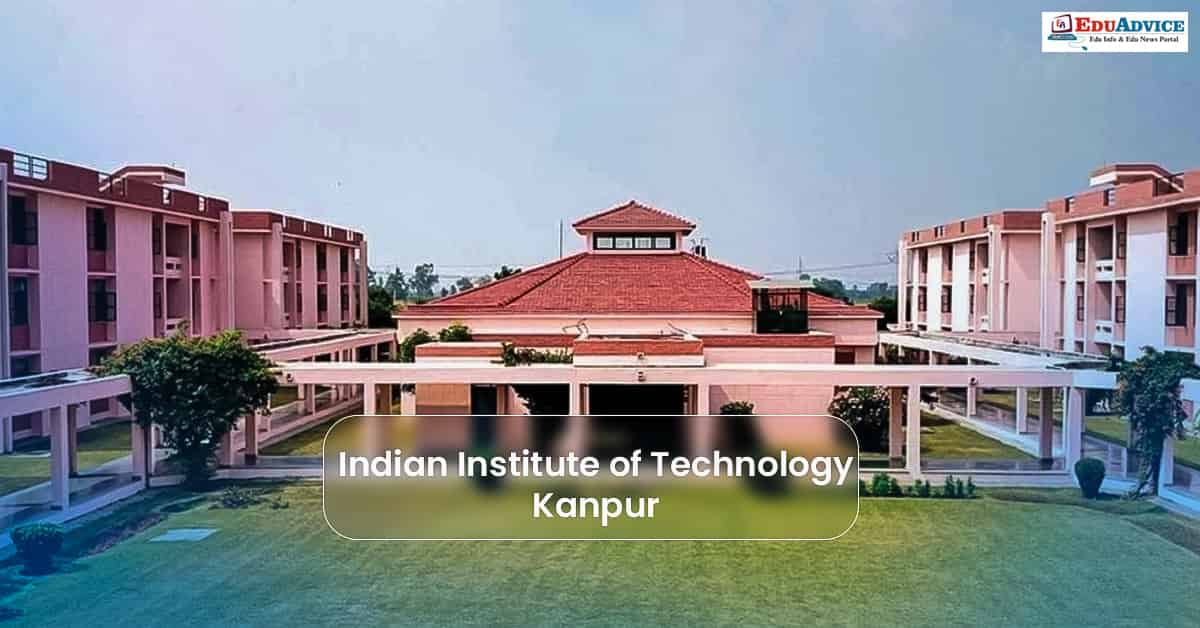
IIT Kanpur, IIT-BHU Faculty Representation: What RTI Data Shows
Two IITs, IIT Kanpur and IIT (BHU) Varanasi, are facing queries on the representation of faculty members from the reserved categories. Data sourced through the Right to Information (RTI) Act shows that both the IITs have a low number of faculty members of SC, ST, and OBC categories among their faculty members.
As per the data, the number of reserved category faculty members among working faculty members stands at 13.1% for IIT Kanpur, while for IIT (BHU) Varanasi, the corresponding number is at 21.9%. The data was published by Careers360 based on the RTI responses. The numbers become even more disappointing when one looks at the distribution of reserved faculty members across the different layers of the faculty.
IIT Kanpur Reserved Faculty Representation
According to the RTI data for IIT Kanpur:
- 25 SC faculty members
- 5 ST faculty members
- 46 OBC faculty members
- 76 reserved category faculty members in total
For this IIT, the RTI data for professors is even more disheartening. There are no professors from SC or ST categories, and there are only three OBC professors. The remainder of the professors number 254, which is in the unreserved category, according to the RTI data published by Careers360.
The faculty members at the associate professor level of IIT Kanpur number 128. At this level, the institute has 8 SC, 1 ST, and 7 OBC faculty members. The institute has 17 SC, 4 ST, and 36 OBC faculty members at the assistant professor level. This analysis clearly shows that the representation problem is especially visible at the highest level of academia.
IIT-BHU Varanasi Exhibits High, Yet Limited, Faculty Representation
Roughly one in every five faculty members at IIT (BHU) Varanasi are from the SC, ST or OBC categories, with 82 of 374, or 21.9 percent, belonging to these categories, according to RTI data. While this number is higher than faculty representation at IIT Kanpur, it still falls significantly short of the collective faculty representation mandated by the central quota system for SC, ST, and OBC categories.
It is also worth noting that a direct comparison of working faculties and an approved quota system should be done with caution. Quota-based faculty appointments do not rely on a percentage of people currently holding the position. Instead, they occur within sanctioned posts, cadres, and roster points.
Some IITs Have Reported Special Recruitment Drives In the Past
This issue is not necessarily new. Parliamentary documents show some IITs have previously reported special recruitment drives to fill vacant faculty positions in the reserved categories. IIT Kanpur has also informed Parliament that they post continuous employment ads and have carried out special recruitment drives for the reserved categories. A parliamentary document for 2024 also mentioned several special recruitment drives in the previous years by the Institute.
IIT (BHU) has also reported special recruitment drives for SC, ST, OBC, EWS, and PwD candidates. A Rajya Sabha document mentioned that the Institute also posted special recruitment ads for the Faculty positions at the levels of Professors, Associate Professors, and Assistant Professors. The absence of faculty representation as shown in these records should also be treated with caution, since ongoing efforts to fill the quota system have been reported. This especially holds true with the latest RTI figures showing an uneven distribution of faculty representation.
Why the Professor-level Numbers Matter
The most significant aspect of RTI data is not the total percentage. It may be the level specific distribution of faculty in reserved categories. At IIT Kanpur, the complete absence of SC and ST Professors, with only 3 OBC Professors, is in stark contrast with the representation at the level of Assistant Professors.
Beyond hiring, the second concern is how representation is ensured along the entire academic pipeline. Hiring solves only one concern. Composition of the higher levels of the faculty is not just about hiring, but may depend on the pattern of promotion and retention, the requirements of senior faculty, and the available pool of candidates.
IIT Kanpur Describes Data as “Imprecise”
There is also a substantial caveat to the numbers. IIT Kanpur calls the data they released, “imprecise” and IIT (BHU) confirmed the data and stated that a more detailed response may be forthcoming.
So, the data released under RTI cannot be seen as an assessment of compliance with all the reservation requirements. It may be viewed as a record of representation by working faculty of the various categories within the institutes.
Final Thoughts
The data on Rodriguez Though Index (RTI) shows low representation of reserved categories in faculty among the IITs of Kanpur and Varanasi. The faculty-level numbers among IIT-Kanpur are significantly low. However, IIT-Varanasi has a higher overall representation of reserved categories; however, a considerable gap in representation exists.
The next important question is not only about the number of reserved category faculty employed. It is also about the presence of recruited and promoted faculty in the various academic levels that will show real representation across different faculty levels.
Click Here for More Latest News