
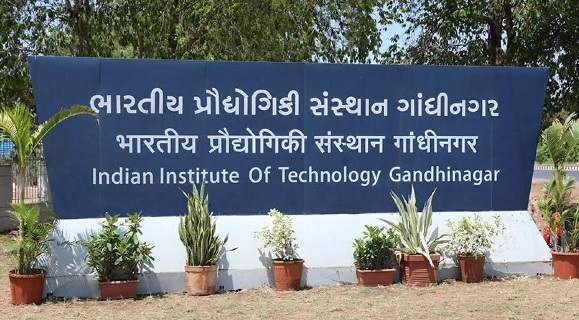
GANDHINAGAR, 5th May 2026: As India’s Artificial Intelligence (AI) revolution accelerates under the Make in India and Startup India, IIT Gandhinagar is emerging as a launchpad for startups that translate research into real-world impact. Through its AI-focused research centres, student-led projects, and industry collaborations, the institute is transforming academic innovation into scalable enterprises.
From multilingual AI models and robotics to climate-risk and safety solutions, IIT Gandhinagar’s ecosystem, strengthened by its Research Park and Innovation and Entrepreneurship Center, nurtures startups aligned with national priorities and Sustainable Development Goals, including SDG 9 and SDG 11.
As AI continues to shape global development, IIT Gandhinagar’s growing portfolio highlights how campuses evolve into engines of innovation. With this observation in mind, Prof Rajat Moona, Director of IIT Gandhinagar, said, “Built on interdisciplinary research, strong institutional backing, and a problem-first approach, our startup ecosystem is designed to move beyond knowledge creation to enabling real-world solutions. At IIT Gandhinagar, we strive to ensure ideas move seamlessly from the lab to society, translating into impactful technologies that address societal needs.”
Key startups incubated by IIT Gandhinagar
· Soket AI
Soket AI (founded by Mr. Abhishek Upperwal), a startup building large language models for Math, Code, and Reasoning. “While English dominates AI systems globally, we build models suited to India’s linguistic diversity with strong Mathematical, Coding, and Reasoning capabilities” explains co-founder Prof. Mayank Singh, Associate Professor, Computer Science and Engineering, IIT Gandhinagar.
While the majority of LLMs built in India are designed for general conversational use cases, Soket AI’s approach extends to highly sophisticated agentic applications such as cyber security, defence strategy planning, AI-driven financial services, and software development.
Supporting this vision, Soket AI’s Project EKA (“एक” in Hindi) aims to build effective AI systems, emphasizing ethical, open-source, and energy-efficient development for inclusive, context-aware AI. The upcoming model series named “Eka” will showcase SOTA-level performance in comparison with the global AI models. In addition, it will also support compact, on-device deployments, with strong agentic performance. Soket’s “Dhrith” is another state-of-the-art ASR model, end-to-end developed in India, designed to process large volumes of audio data while preserving emotions and other audio subtleties. As part of the Government of India’s IndiaAI Mission, Soket AI is among the startups selected by the Ministry of Electronics and Information Technology and was among the four Indian startups that were called on stage with Shri Narendra Modi, Hon’ble Prime Minister of India, during the AI Summit, 2026, held in New Delhi.
· AB6 Robotics
AB6 Robotics, a deep-tech startup incubated by IIT Gandhinagar, has developed an adaptive AI model that works with hardware, particularly robotics, for the purpose of personalised on-hardware learning. At a time when the world is adapting rapidly to software-driven AI, access to high-quality hardware is a challenge and learning styles of the current generation of learners are dramatically shifting.
AB6 Robotics focuses on enabling learners to build real-world engineering capabilities with their advanced AI that understands hardware and on-hardware learning. “Being a faculty and alumni-led startup allows us to directly address gaps we’ve seen in education by shifting from theoretical approaches to more application-oriented experiences, integrating physical systems with intelligent guidance,” says co-founder Prof Harish Palanthandalam-Madapusi, Professor, Mechanical Engineering, IIT Gandhinagar.
At the core of this approach is AB6 Platform, a modular, table-top robotics platform that uses AI to combine hardware, software, and guided workflows to enable hands-on problem-solving. Designed to bridge the gap between concepts and deployment, it supports learning across robotics, automation, sensing, and control in environments that reflect practical use cases. “Our focus is to help learners move from understanding concepts to building systems that can solve real problems, preparing them for an AI-driven industrial landscape,” adds co-founder Mr. Suyash Patidar.
· AIResQ ClimSols
Extending AI’s impact to environmental challenges, Prof Udit Bhatia, Dr Divya Upadhyay, Prof Vivek Kapadia, and Prof Auroop Ganguly founded AIResQ ClimSols, translating over a decade of flood research at IITG andhinagar into real-world solutions.
“Academic papers alone would never solve the urban flooding across 560 Indian cities,” explains Prof. Bhatia, Associate Professor, Civil Engineering, IIT Gandhinagar. Pilot projects of AIResQ ClimSols with the Municipal Corporations of Bhubaneswar and Gurugram enable alerts and response coordination. Their Rain2Resilience Suite integrates tools such as AquaResQ for flood intelligence and MobiResQ for mobility disruptions. Using physics-informed AI, it predicts flood locations, severity, and infrastructure at risk, before rainfall.
As explained by Dr Upadhyay, “It is like bringing together scientific models with machine learning to deliver real-time, hyperlocal flood intelligence”, brought to life through the AI Resilience and Command Centre, which provides live visualization for policymakers, with potential upgrades such as augmented reality and city-scale simulations.
Click Here for More Science & Technology