
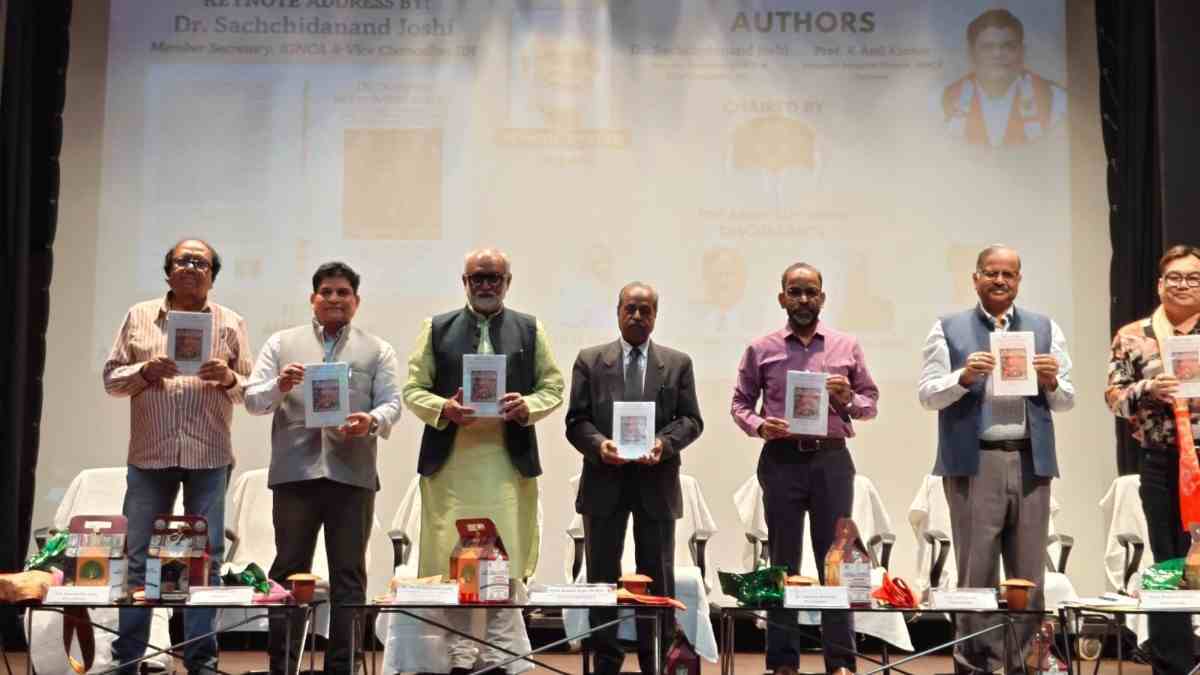
- As the knowledge partner, IGNCA contributed to an academic dialogue on India's civilisational approach to anthropology. The session featured the release of a book exploring the interconnected cultural traditions of forest, hill and plains communities.
Kolkata: The Indira Gandhi National Centre for the Arts (IGNCA), as the knowledge partner, contributed to an important academic dialogue on “Decolonising Indian Anthropology” at the 56th Annual Conference of the Indian Anthropological Society 2026 in Kolkata.
The conference, held from November 16 to 18, 2026, brought together scholars and experts to discuss contemporary developments and perspectives in anthropology. The IGNCA session focused on developing an understanding of Indian anthropology rooted in the country's civilisational ethos and cultural traditions. <Cite refs={["turn751349search0"]}/>
A major highlight of the session was the release of the book Decolonising Indian Anthropology: A Civilisational Approach to the Inter-Relationship Among People of the Forests, Hills and Plains.
The book has been co-authored by Dr Sachchidanand Joshi, Member Secretary, IGNCA and Vice Chancellor, Indian Institute of Heritage; Raghvendra Singh; and Prof. K. Anil Kumar, Convenor, Janapada Sampada Division, IGNCA. It carries a foreword by S. Gurumurthy.
Dr Sachchidanand Joshi Emphasises India's Civilisational Perspective
Delivering the keynote address, Dr Sachchidanand Joshi emphasised the need to develop an Indian approach to anthropology that reflects the country's civilisational ethos.
He highlighted the importance of recognising communities living in forests, hills and plains as equal contributors to Bharat's cultural journey.
The discussion placed emphasis on understanding India's diverse communities through their interconnected histories, cultural practices and knowledge traditions.
New Book Explores Interconnected Cultural Traditions
The newly released publication presents a civilisational perspective on understanding India's diverse communities and their relationships.
Its central focus is the interrelationship among people of forests, hills and plains, examining their contributions to India's cultural and social development.
The book also highlights the significance of indigenous knowledge systems and interconnected cultural traditions in understanding Indian society.
Academic Discussion Led by Eminent Scholars
The session was chaired by Prof. Kamal Kant Misra and featured a panel discussion involving eminent scholars and experts.
The academic dialogue provided an opportunity to discuss the relevance of decolonising Indian anthropology and developing approaches that recognise India's own intellectual traditions, civilisational experiences and community knowledge systems.
IGNCA's participation as the knowledge partner reflected its engagement with academic initiatives focused on Indian arts, culture, heritage and traditional knowledge.
About the 56th Annual Conference of the Indian Anthropological Society
The 56th Annual Conference of the Indian Anthropological Society was held from November 16 to 18, 2026, in Kolkata.
The conference provided a platform for scholars and researchers to engage with contemporary issues and perspectives in anthropology. IGNCA's session on “Decolonising Indian Anthropology” contributed to the broader academic discussion by bringing attention to India's civilisational approach and the interconnected cultural traditions of its communities.
Frequently Asked Questions (FAQs)
1. What was the theme of the IGNCA academic session at the 56th Annual Conference?
The session focused on “Decolonising Indian Anthropology” and explored a civilisational approach to understanding India's diverse communities.
2. Where was the 56th Annual Conference of the Indian Anthropological Society held?
The 56th Annual Conference was held in Kolkata from November 16 to 18, 2026.
3. What role did IGNCA play in the conference?
IGNCA participated as the knowledge partner and contributed to the academic dialogue on decolonising Indian anthropology.
4. Which book was released during the session?
The book released was Decolonising Indian Anthropology: A Civilisational Approach to the Inter-Relationship Among People of the Forests, Hills and Plains.
5. Who are the co-authors of the book?
The book was co-authored by Dr Sachchidanand Joshi, Raghvendra Singh and Prof. K. Anil Kumar. S. Gurumurthy wrote the foreword.
6. What was the central message of Dr Sachchidanand Joshi's keynote address?
Dr Joshi emphasised the need for an Indian anthropology rooted in the country's civilisational ethos and recognising forest, hill and plains communities as equal contributors to India's cultural journey.
7. Who chaired the academic session?
The session was chaired by Prof. Kamal Kant Misra.
8. What subjects does the book explore?
The book examines India's diverse communities, indigenous knowledge systems and interconnected cultural traditions through a civilisational perspective.
Click Here for More Institutional Activities