
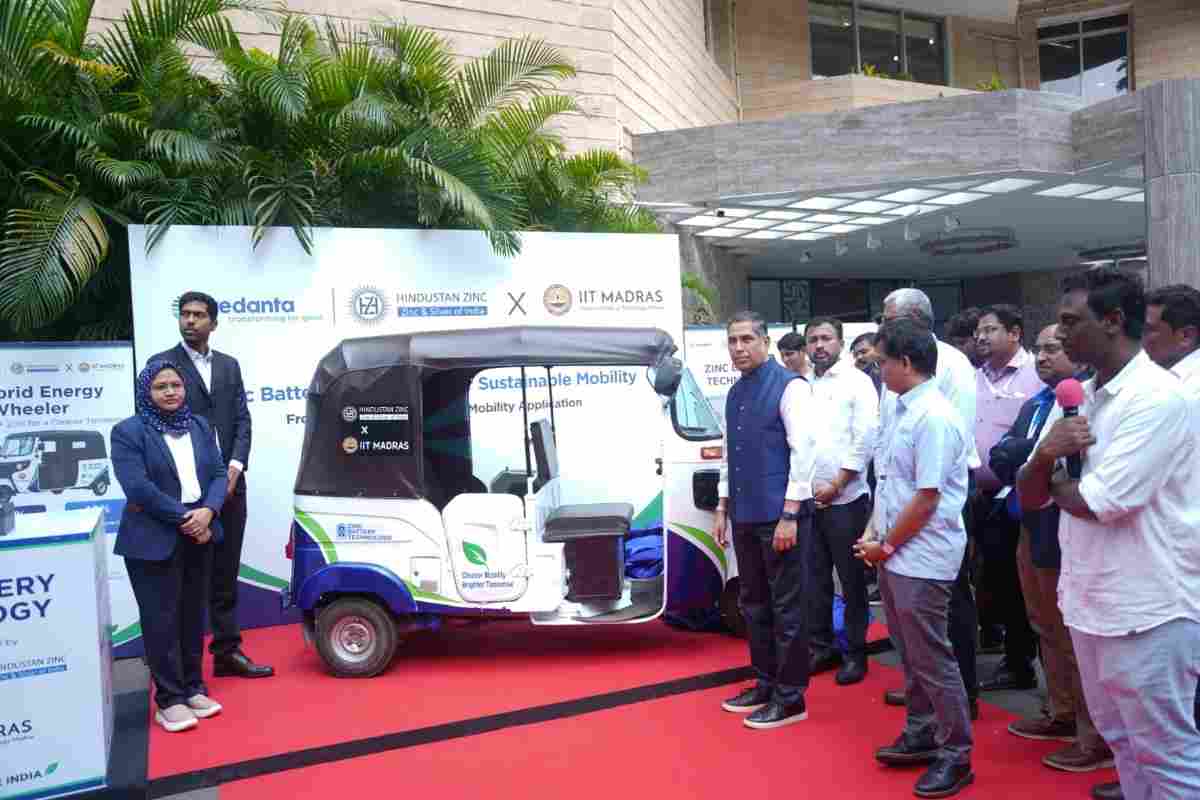
- Hindustan Zinc and IIT Madras have unveiled an electric three-wheeler prototype featuring an approximately 1 kWh zinc-air battery as a range extender. The development marks a significant milestone in indigenous battery research and explores the potential of zinc-based energy storage for next-generation electric mobility.
CHENNAI / UDAIPUR, November 26, 2026: Hindustan Zinc Limited, the world's largest integrated zinc producer, in collaboration with the Indian Institute of Technology Madras (IIT Madras), has unveiled an electric three-wheeler prototype integrated with an approximately 1 kWh zinc-air battery, developed as a range extender for electric mobility applications.
Unveiled during the recently held IIT Madras Energy Summit 2026, the development marks an important milestone in the ongoing research collaboration between the two institutions and advances the development of indigenous zinc-based energy storage solutions for emerging applications.
The prototype was unveiled in the presence of Shri Praveen Chakravarthy, Member of Parliament (Rajya Sabha); Mr. Amarendu Prakash, CEO and Whole-time Director, Hindustan Zinc Limited; Prof. Manu Santhanam, Dean (ICSR), IIT Madras; and Dr. Aravind Kumar Chandiran of the Department of Chemical Engineering, IIT Madras, who led the project, along with other stakeholders.
1 kWh Zinc-Air Battery Integrated into Electric Three-Wheeler
The electric three-wheeler prototype features a dual-battery configuration, combining conventional lithium-ion battery technology with an approximately 1 kWh zinc-air battery.
The zinc-air battery contributes nearly 10% of the vehicle's total energy requirements. While the existing lithium-ion battery supports acceleration and peak power requirements, the zinc-air battery provides a steady supply of energy during vehicle operation.
This configuration demonstrates the potential of zinc-based battery technology to complement existing energy storage systems and opens up possibilities for its application in electric mobility.
The development also represents progress in exploring alternative battery technologies that could diversify India's electric vehicle energy storage ecosystem.
Why Zinc-Air Batteries Matter for Electric Mobility
Zinc-air batteries generate electricity by utilising zinc and oxygen from the surrounding air. The technology uses a non-flammable, water-based electrolyte and an abundantly available, recyclable metal.
According to the companies, zinc-air batteries offer potential advantages in several areas:
-
Safety: The use of a non-flammable, water-based electrolyte offers potential safety advantages.
-
Resource Availability: Zinc is abundantly available in India, creating opportunities for domestic battery technology development.
-
Recyclability: Zinc is a recyclable metal that can support more sustainable material use.
-
Cost Potential: Zinc-based battery technologies offer the possibility of exploring affordable energy storage solutions.
-
Energy Diversification: Zinc-air batteries could complement existing lithium-ion battery systems.
The technology is being explored as an alternative energy storage solution for emerging electric mobility and clean energy applications.
Hindustan Zinc and IIT Madras Collaboration
The research collaboration between Hindustan Zinc and IIT Madras was initiated in 2024. Since then, the project has progressed from laboratory-scale research to a vehicle-level demonstration.
The latest prototype represents an important step towards evaluating the practical application of zinc-air battery technology in electric mobility.
The collaboration also highlights the role of industry-academia partnerships in advancing indigenous research, technology development and potential commercial applications.
India's abundant zinc resources provide an opportunity to strengthen domestic capabilities in next-generation energy storage technologies and reduce dependence on conventional battery solutions.
Hindustan Zinc CEO Highlights India's Energy Storage Potential
Speaking on the development, Mr. Amarendu Prakash, CEO and Whole-time Director of Hindustan Zinc Limited, highlighted the potential of zinc-based energy storage solutions.
He said:
"At Hindustan Zinc, we are constantly exploring opportunities to expand the applications of zinc and unlock greater value from this versatile metal. With zinc being abundantly available in India, there is an opportunity to explore indigenous energy storage solutions that can contribute to the vision of Viksit Bharat."
He further stated that the collaboration with IIT Madras reflects the company's commitment to translating scientific research into practical applications, creating new demand avenues for zinc and strengthening its role in the global clean energy transition.
IIT Madras Emphasises Research in Energy Generation and Storage
Congratulating the research team, Prof. V. Kamakoti, Director of IIT Madras, highlighted the importance of research and development in energy generation, storage and distribution.
He noted that energy is a major global priority across sectors, including artificial intelligence, agriculture and advanced manufacturing.
He also emphasised the importance of developing and commercialising technologies that can support energy generation and storage from different sources, particularly renewable energy.
The collaboration with Hindustan Zinc is another effort by IIT Madras towards advancing research, development and commercialisation in the energy sector.
Hindustan Zinc's Strategy for Next-Generation Energy Technologies
For Hindustan Zinc, the collaboration forms part of a broader strategy to explore emerging applications of zinc and expand its presence in value-added product segments.
The company is exploring opportunities across renewable energy storage and electric mobility as part of its diversification strategy under HZL 2.0.
Through application-led innovation and research partnerships, Hindustan Zinc aims to unlock new opportunities for zinc-based technologies and strengthen the role of zinc in the global energy transition.
The electric three-wheeler demonstration with IIT Madras represents a step towards exploring how India's domestic mineral resources can contribute to next-generation energy storage solutions.
However, the prototype is a research and development demonstration, and further development and evaluation will be necessary before establishing its commercial readiness.
About Hindustan Zinc Limited
Hindustan Zinc Limited (BSE: 500188; NSE: HINDZINC), a Vedanta Group company, is the world's largest integrated zinc producer and is among the top 10 silver producers globally.
The company supplies products to more than 30 countries and holds approximately 74% of India's primary zinc market.
Hindustan Zinc has been recognised as the world's most sustainable company in the metals and mining category for the third consecutive year by the S&P Global Corporate Sustainability Assessment 2025.
In 2025, the company became the first Indian company to join the International Council on Mining & Metals (ICMM).
It has also launched EcoZen, described as Asia's first low-carbon green zinc brand produced using renewable energy. The company is a certified 3.32-times water-positive organisation and has committed to achieving Net Zero emissions by 2050 or sooner.
For more information, visit the official website: https://www.hzlindia.com/
Frequently Asked Questions (FAQs)
1. What battery technology have Hindustan Zinc and IIT Madras developed?
Hindustan Zinc and IIT Madras have developed an electric three-wheeler prototype integrated with an approximately 1 kWh zinc-air battery designed to function as a range extender.
2. What is the capacity of the zinc-air battery?
The prototype incorporates an approximately 1 kWh zinc-air battery.
3. How much energy does the zinc-air battery contribute to the vehicle?
The zinc-air battery contributes nearly 10% of the electric three-wheeler's total energy requirements.
4. How does the dual-battery system work?
The lithium-ion battery supports acceleration and peak power requirements, while the zinc-air battery provides a steady supply of energy during vehicle operation.
5. What are the advantages of zinc-air batteries?
Zinc-air batteries use zinc and oxygen from the surrounding air to generate electricity. Their potential advantages include safety benefits from a non-flammable, water-based electrolyte, zinc availability, recyclability and the possibility of affordable energy storage.
6. When did Hindustan Zinc and IIT Madras begin their collaboration?
The research collaboration between Hindustan Zinc and IIT Madras was initiated in 2024.
7. Where was the electric three-wheeler prototype unveiled?
The prototype was unveiled during the IIT Madras Energy Summit 2026.
8. Who led the zinc-air battery research project at IIT Madras?
Dr. Aravind Kumar Chandiran from the Department of Chemical Engineering, IIT Madras, led the project.
9. Is the zinc-air battery technology commercially available for electric vehicles?
The announcement describes a vehicle-level research and development demonstration. It does not establish that the technology is commercially available for electric vehicles.
10. Why is zinc important for India's energy transition?
India's abundant zinc resources offer opportunities to develop indigenous energy storage technologies, diversify battery solutions and support the country's clean energy and electric mobility ambitions.
Click Here for More Science & Technology