
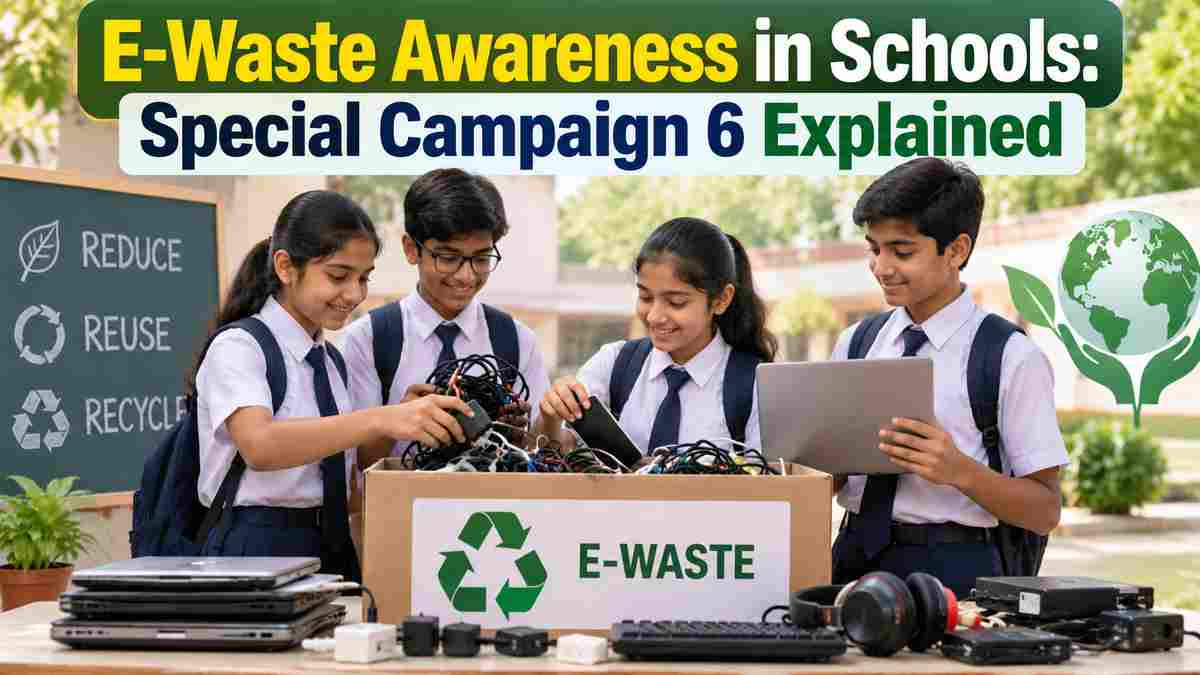
E-Waste Awareness in Schools: Students Take Action Under Special Campaign 6
New Delhi: What happens to old mobile phones, damaged chargers, and broken headphones? For many students, the answer may have been throwing such items into the trash. School-based e-waste awareness activities encourage learners to rethink discarding unwanted electronics.
Schools are conducting collection campaigns and interactive sessions under Special Campaign 6 to educate children about electronic waste management. The initiative helps students connect classroom lessons to action through interactive sessions and drives. As part of the awareness campaign, students are learning to identify e-waste, collect it, and dispose of it responsibly. They can understand how old electronic products can be repurposed and participate in drives to help collect discarded items.
Special Campaign 6: Key Details
|
Particular |
Details |
|
Initiative |
Special Campaign 6 |
|
Main focus |
Electronic waste awareness and responsible management |
|
Target participants |
School students |
|
Activities |
E-waste collection drives and interactive awareness sessions |
|
Key learning areas |
Identification, safe disposal, reuse, recycling and refurbishment |
|
Related initiatives |
Eco Clubs for Mission LiFE, Mission LiFE and Swachh Bharat |
|
Intended outcome |
Greater awareness of responsible e-waste management |
How Are Schools Turning E-Waste Learning into Action?
Children can develop sustainable attitudes and behaviours when they understand the link between classroom concepts and their application in real life. For instance, students can relate to learning about managing e-waste as the discarded items come from their homes, schools, and surroundings. The above campaign activities can help schools educate students about various aspects of e-waste management. These include:
- Learning to identify e-waste: Students can understand what items are considered electronic waste and how they can be managed.
- Participating in collection drives: Drives can help students learn about segregating e-waste from other types of waste.
- Learning about safe disposal: Interactive activities can teach students about the importance of proper e-waste disposal.
- Understanding reuse and refurbishment: Students can learn how some electronic items can be reused or refurbished.
- Learning about recycling: Recycling involves separating useful components from electronic items, and students can learn about its importance in reducing waste.
Moreover, such activities can also create awareness among students and their families about responsible electronic waste management.
Why Is E-Waste Management Important for Students to Understand?
Electronic products are made using materials that can be recycled and valuable components that can be extracted. On the other hand, such items may contain harmful chemicals that can cause adverse effects if not properly disposed of or recycled. Improper disposal of electronic waste, such as mixing it with regular garbage, can lead to the leaching of harmful substances into the environment. Informal recycling and burning of electronic waste can also expose individuals to toxic fumes.
Proper recycling and disposal can help reduce the impact of electronic waste on the environment and human health. Moreover, repair and refurbishing electronic items can help extend the lifespan of electronic products, thereby reducing the need to purchase new ones. Therefore, children can develop sustainable behaviours by understanding how to manage electronic waste. However, awareness about e-waste management is essential but insufficient to improve the situation, as the collected items need to reach the right recycling organisations.
Eco Clubs for Mission LiFE: Connecting Environmental Learning with Daily Habits
Mission LiFE, or Lifestyle for Environment, promotes sustainable habits among individuals and communities. Eco Clubs for Mission LiFE can help connect environment-related activities, such as e-waste collection drives, with daily behaviours. Eco Club activities can enable students to understand the impact of their actions and engage them in sustainable practices.
Such events can inspire children to spread awareness about managing electronic waste among their families and friends. Eco Club activities can also help students relate to broader environmental concerns, such as conserving natural resources and reducing pollution, by working on drives and projects. As a result, children can develop responsible behaviours about managing electronic waste.
How Can Students Dispose of E-Waste Responsibly?
Students can follow responsible e-waste management practices to ensure safe and appropriate disposal. They can:
- Keep electronic waste away from regular trash bins and recycle bins.
- Ensure that the electronic items to be disposed of are not repairable, reusable, or suitable for refurbishment.
- Remove confidential information from electronic devices before disposing of them.
- Take electronic waste to authorised recycling organisations.
- Avoid burning electronic items and dismantling them without proper safety equipment.
- Raise awareness about responsible e-waste management in their families and communities.
Moreover, schools conducting collection drives should ensure that the e-waste is disposed of or recycled appropriately.
Building Environmentally Responsible Habits Through School Education
The above activities demonstrate that schools can foster student engagement by bridging the gap between theoretical knowledge and practical applications. Students can become active participants in managing electronic waste by engaging in collection drives and interactive sessions. The next step is to ensure that the lessons learned are incorporated into students’ daily lives. Therefore, schools can undertake such awareness campaigns regularly and collaborate with local authorities to ensure appropriate disposal of electronic waste.
Moreover, the engagement of local recycling organisations can help collection drives be more effective in the long run. Creating awareness about electronic waste management can help students develop environmentally conscious behaviours. Such attitudes can then be reinforced through interactive activities. Making learners responsible for managing e-waste can help them understand the importance of reducing electronic waste and conserving natural resources.
FAQs
1. What is Special Campaign 6 focusing on in schools?
The activities described in the article highlight electronic waste awareness activities conducted in schools.
2. What is e-waste?
E-waste refers to electronic and electrical equipment that is discarded.
3. How are students learning about e-waste management?
Students are engaging in collection drives and interactive activities to learn about electronic waste. They are learning how to identify e-waste, its safe disposal, and ways to reuse or recycle it.
4. Why should electronic waste not be mixed with ordinary rubbish?
Some electronic items consist of hazardous elements and valuable components. Electronic waste must, therefore, be disposed of in a different manner than regular trash.
5. How can families dispose of old electronic devices responsibly?
Families can utilise authorised recycling organisations to dispose of old electronic devices. They should also consider repairing or reusing such items when possible and ensure that confidential data is removed from electronic devices.
6. What is the connection between e-waste awareness and Mission LiFE
Mission LiFE promotes sustainable habits among individuals and communities. Electronic waste awareness activities can help students develop sustainable attitudes towards managing electronic waste.
Click Here for More Latest News