
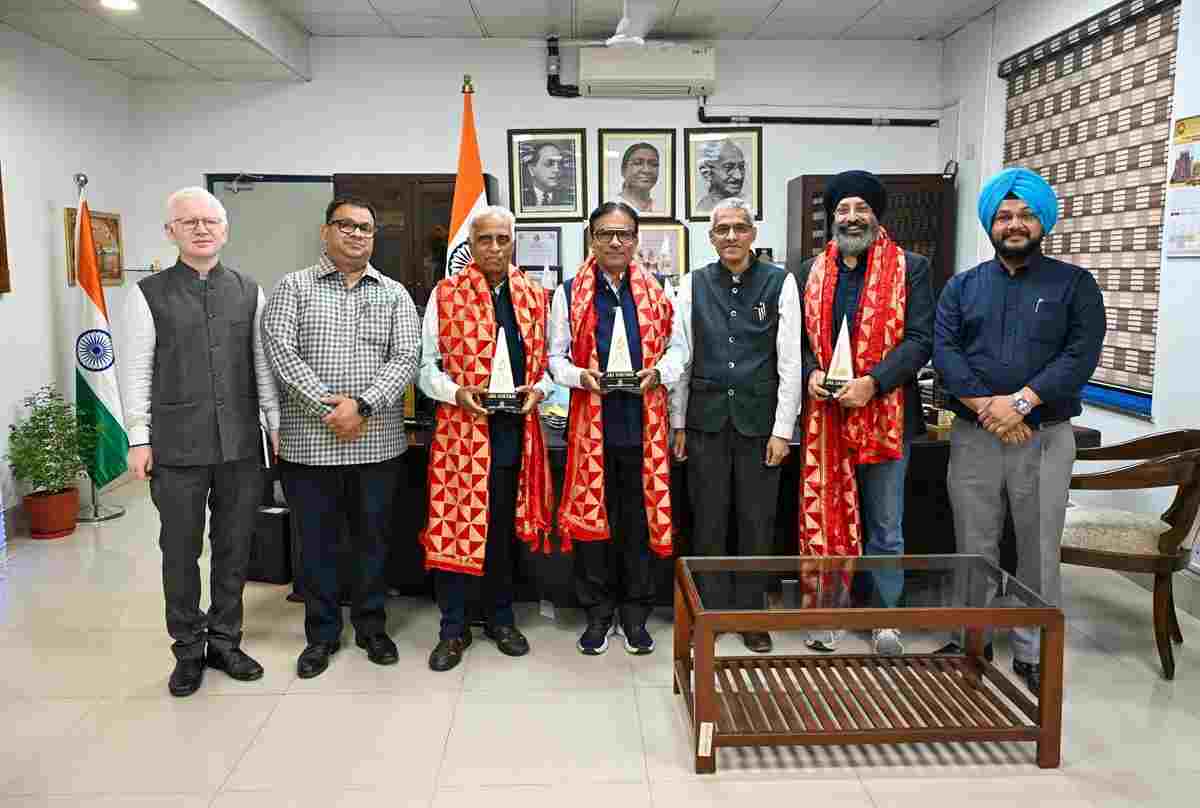
- The Department of Mass Communication and Media Studies is conducting the October 27–28 workshop with Public Media Tech Foundation to promote responsible digital journalism, media literacy and misinformation verification.
Bathinda, October 27, 2026: The Central University of Punjab (CU Punjab), Bathinda, has commenced a two-day expert lecture-cum-workshop on “Digital Media Content Production, Distribution and Fact-Checking” to promote responsible digital journalism, media literacy and the verification of online information.
The workshop is being organised by the university’s Department of Mass Communication and Media Studies in collaboration with the Public Media Tech Foundation, New Delhi. The programme is taking place on October 27–28, 2026, at the university’s Hindi Bhawan.
The inaugural session featured academician and media educator Prof. B. K. Kuthiala, former Chairman of the Haryana State Higher Education Council and former Vice-Chancellor of Makhanlal Chaturvedi National University of Journalism and Communication, Bhopal, as the chief guest. Journalist, columnist and documentarian Ravinder Singh Robin participated as the distinguished speaker.
Focus on Media Literacy and Responsible Digital Content
The programme opened with a welcome address by Dr. Rubal Kanozia, Associate Professor and Head of the Department of Mass Communication and Media Studies and Director of the Community Radio Station.
Dr. Kanozia highlighted the importance of media literacy, responsible social media use and fact-checking in addressing the growing challenges posed by misinformation. He also acknowledged the contributions of Prof. Kuthiala and Mr. Robin to media education, journalism and documentary filmmaking.
The workshop aims to help participants develop skills for creating and distributing digital media content while maintaining accuracy, authenticity and responsibility.
Prof. B. K. Kuthiala Emphasises Verification Before Sharing
Addressing participants, chief guest Prof. B. K. Kuthiala stressed the importance of verifying information before creating, distributing or forwarding digital content.
He observed that people frequently share social media messages without checking their accuracy, allowing misinformation to spread and potentially disturbing social harmony. He encouraged participants to focus on investigating the truth, presenting information accurately and identifying fake news.
Drawing on examples from Punjabi folk songs and Swami Vivekananda’s address in Chicago, Prof. Kuthiala highlighted the values of truth, mutual respect and acceptance of differences.
He urged young people to remain active on social media while avoiding the circulation of unverified, unethical or harmful material. He also encouraged them to consider whether their posts contribute to social harmony or create divisions.
Ravinder Singh Robin Shares Insights into Digital Journalism
Distinguished speaker Ravinder Singh Robin discussed his professional journey across print, electronic and digital media, explaining how journalism has evolved over the years.
He highlighted the importance of capturing audience attention in digital storytelling. According to him, the opening line of a written story and the first five to ten seconds of a video can be crucial in engaging viewers.
Mr. Robin showcased examples of his recent video productions and answered participants’ questions about approaching respondents and gathering relevant information for stories.
He also encouraged aspiring media professionals to read extensively and develop a thorough understanding of a subject before producing content about it.
Acting Vice-Chancellor Calls for Authentic News Sharing
In his presidential address, Acting Vice-Chancellor Prof. Ramakrishna Wusirika thanked Prof. Kuthiala and Mr. Robin for sharing their expertise on digital media content creation.
He emphasised the importance of media literacy and encouraged students to share authentic news on social media. He also urged them to verify information before forwarding messages.
The inaugural session concluded with a vote of thanks by Prof. Bhaw Nath Pandey, Dean of the School of Information and Communication Studies. Dr. Mohd. Aleem Khan coordinated the proceedings.
Faculty and Students Participate
Faculty members and students from various university departments attended the programme. Students from Baba Farid Group of Institutions, Bathinda, also participated.
Faculty members from the Department of Mass Communication and Media Studies present at the event included Dr. Kinshuk Pathak, Associate Professor; Dr. Chhavi Garg; Dr. Mahesh Meena; and Dr. Vishnu Achutha Menon.
Hands-On Sessions Scheduled for October 28
The workshop will continue on October 28, 2026, with practical training sessions on digital media content production, distribution and fact-checking.
The second day is expected to give participants opportunities to engage with practical aspects of digital content creation and information verification, complementing the discussions held during the inaugural session.
The programme reflects the growing importance of responsible digital communication and the need for media professionals and social media users to assess information carefully before publishing or sharing it.
Frequently Asked Questions (FAQs)
Q1. Which university is organising the digital media workshop?
The Central University of Punjab (CU Punjab), Bathinda, is organising the workshop through its Department of Mass Communication and Media Studies.
Q2. What is the title of the workshop?
The workshop is titled “Digital Media Content Production, Distribution and Fact-Checking”.
Q3. When is the workshop being held?
The two-day workshop is taking place on October 27 and 28, 2026.
Q4. Which organisation is collaborating with CU Punjab?
The university is organising the programme in collaboration with the Public Media Tech Foundation, New Delhi.
Q5. Who was the chief guest at the inaugural session?
Prof. B. K. Kuthiala, former Chairman of the Haryana State Higher Education Council and former Vice-Chancellor of Makhanlal Chaturvedi National University of Journalism and Communication, Bhopal, attended as chief guest.
Q6. Who was the distinguished speaker?
Journalist, columnist and documentarian Ravinder Singh Robin participated as the distinguished speaker.
Q7. What were the key themes discussed during the inaugural session?
The discussions covered media literacy, responsible social media use, fact-checking, misinformation, digital storytelling and the importance of verifying information before sharing it.
Q8. What activities are planned for the second day?
Hands-on training sessions on digital media content production, distribution and fact-checking are scheduled for October 28, 2026.
Q9. Where was the inaugural session held?
The inaugural session took place at Hindi Bhawan at the Central University of Punjab, Bathinda.
Click Here for More Institutional Activities