
-
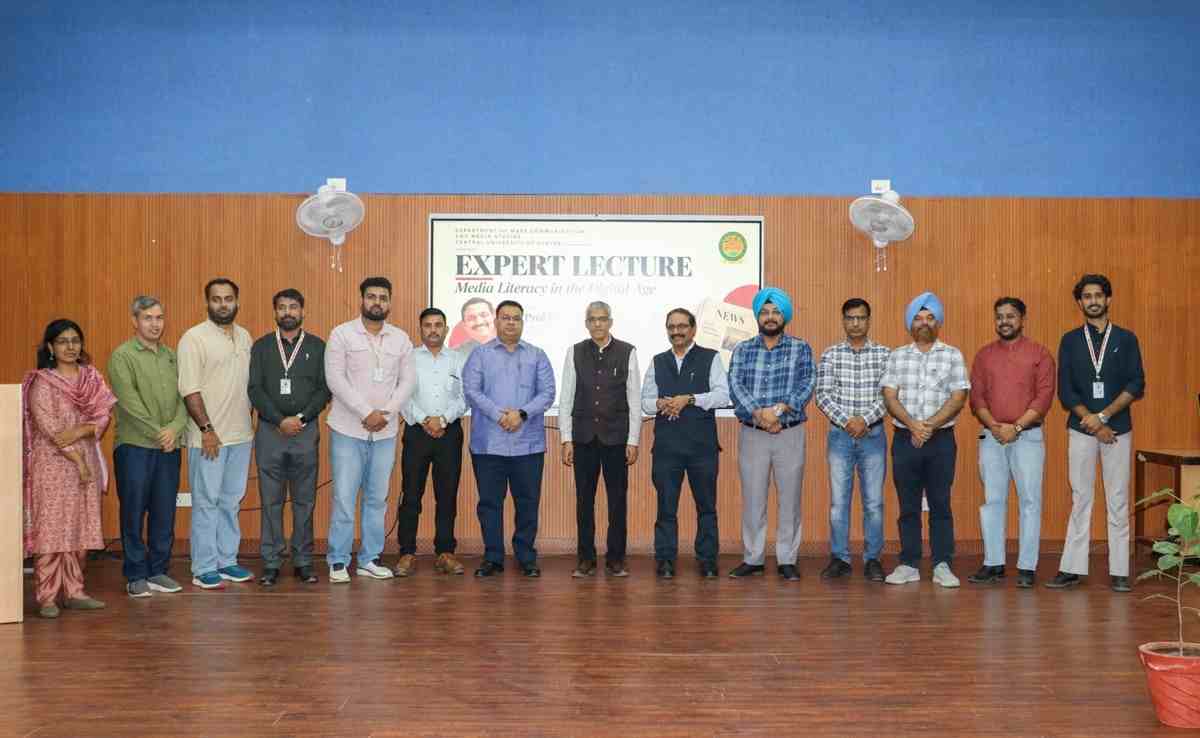
Prof. K. G. Suresh emphasises source verification, fact-checking and responsible digital media use, urging higher education institutions to introduce certificate programmes in fact-checking.
Bathinda, October 21, 2026: The Department of Mass Communication and Media Studies at the Central University of Punjab organised an expert lecture on “Media Literacy in the Digital Age”, highlighting the importance of fact-checking, critical thinking and responsible digital communication. Prof. K. G. Suresh, Director of India Habitat Centre, New Delhi, and former Director General of the Indian Institute of Mass Communication (IIMC), delivered the lecture.
The programme was organised under the patronage of Acting Vice-Chancellor Prof. Ramakrishna Wusirika. The session examined the opportunities offered by digital technology alongside the growing challenges of fake news, misleading information, cybercrime and cyberbullying.
Prof. K. G. Suresh Emphasises Verification of Original Sources
Addressing students and faculty members, Prof. K. G. Suresh explained how the growing reach of the internet and smartphones has transformed access to information, including in remote villages and tribal areas.
He noted that digital platforms allow rural communities to showcase their cultural heritage, raise local concerns, connect with wider audiences and access new economic opportunities. The expanding digital environment has also enabled people to become “prosumers”—both consumers and creators of digital content.
However, he cautioned that the constant circulation of online information makes it increasingly difficult to distinguish verified facts from false or misleading claims.
Prof. Suresh stressed that journalists must verify information, check facts and consult reliable sources before publishing a story. He emphasised that going directly to the original source is essential for accuracy and credibility in journalism.
Misinformation, Disinformation and Fake News
During the lecture, Prof. Suresh explained the distinction between misinformation and disinformation. Misinformation refers to false information shared without an intention to deceive, whereas disinformation is deliberately circulated to mislead people.
Referring to the COVID-19 pandemic, he discussed how unverified reports and misleading claims about public health measures and vaccination created confusion and affected public trust.
He urged people to question the information they encounter online instead of accepting or sharing it without verification. The session highlighted the need to develop critical media-consumption habits, particularly as digital platforms play an increasingly important role in everyday communication.
Call for Fact-Checking Programmes in Higher Education
Prof. Suresh called upon higher education institutions to introduce certificate programmes in fact-checking. According to him, such initiatives could strengthen the credibility of independent journalists and support the development of hyperlocal media.
The discussion highlighted the role of journalism education in equipping students with practical skills to identify misleading content, evaluate sources and verify claims before disseminating information.
Participants were encouraged to approach digital content critically and understand the responsibilities associated with creating and sharing information online.
Acting Vice-Chancellor Highlights Responsible Digital Media Use
In his presidential address, Acting Vice-Chancellor Prof. Ramakrishna Wusirika thanked Prof. Suresh for sharing his insights on media literacy. He emphasised the importance of promoting media awareness, critical thinking and responsible use of digital platforms among students through academic initiatives.
The programme began with a welcome address and an introduction to the guest by Dr. Rubal Kanozia, Associate Professor and Head of the Department of Mass Communication and Media Studies, and Director of the Community Radio Station.
The session concluded with a vote of thanks by Prof. Bhaw Nath Pandey, Dean of the School of Information and Communication Studies.
Faculty Members and Students Attend the Lecture
Faculty members and students from different departments of the Central University of Punjab attended the programme. Students from Baba Farid Group of Institutions, Bathinda, also participated.
Faculty members present included Dr. Kinshuk Pathak, Associate Professor; Dr. Chhavi Garg; Dr. Mahesh Meena; Dr. Mohd. Aleem Khan; and Dr. Vishnu Achutha Menon.
The lecture provided participants with an opportunity to examine both the benefits and risks of digital media. It reinforced the importance of source verification, fact-checking and responsible online behaviour in strengthening public trust and journalistic credibility.
Frequently Asked Questions (FAQs)
1. What was the topic of the lecture at the Central University of Punjab?
The expert lecture focused on “Media Literacy in the Digital Age” and addressed fact-checking, misinformation, disinformation and responsible digital media use.
2. Who delivered the expert lecture?
Prof. K. G. Suresh, Director of India Habitat Centre, New Delhi, and former Director General of the Indian Institute of Mass Communication, delivered the lecture.
3. When and where was the programme held?
The programme was held on October 21, 2026, at the Central University of Punjab in Bathinda, Punjab.
4. What is the difference between misinformation and disinformation?
Misinformation is false information shared without an intention to mislead. Disinformation is false information deliberately spread to deceive people.
5. Why did Prof. Suresh emphasise checking original sources?
He highlighted that consulting original sources and verifying facts before publication are essential for maintaining accuracy and credibility in journalism.
6. What did Prof. Suresh recommend to higher education institutions?
He called upon higher education institutions to introduce certificate programmes in fact-checking to strengthen independent journalism and promote hyperlocal media.
7. How can students practise responsible media literacy?
Students can question unverified claims, check original sources, compare information with reliable references and avoid forwarding content before confirming its accuracy.
Click Here for More Latest News