
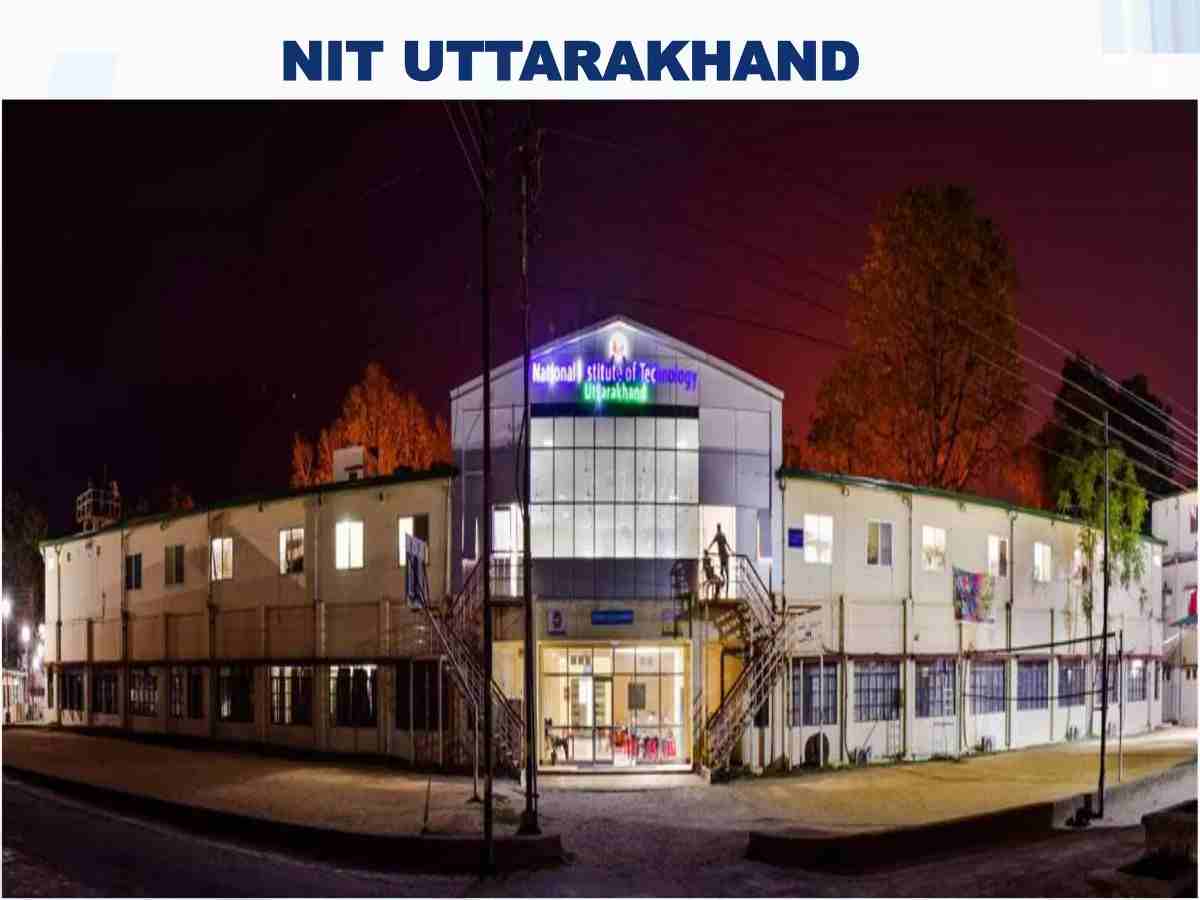
Uttarakhand: In a collaborative push to strengthen India's semiconductor and microelectronics research ecosystem, the Department of Electronics Engineering at the National Institute of Technology (NIT) Uttarakhand and the Department of Computer Science at Doon University, Dehradun, have joined forces to organize the 2nd International Conference on Knowledge Driven Approaches in VLSI and RF Design (KeDAR-2027). Scheduled for March 12 and March 13, 2027, with Springer as the publishing partner, the conference builds on the foundation of the inaugural KeDAR 2025 edition, hosted by NIT Uttarakhand on September 5–6, 2025. Initiated to promote research, innovation, knowledge sharing, and industry-academia collaboration, the KeDAR series brings together experienced scientists, faculty members, early-career professionals, and students to translate theoretical breakthroughs into practical technological solutions.
Important Dates and Complete Conference Timeline: Researchers, scholars, and practitioners planning to present their work at KeDAR-2027 must follow the official submission and registration milestones. The final deadline for paper submission is December 15, 2026. Following the peer-review process, authors will receive the acceptance notification on January 30, 2027, which also serves as the deadline for submitting the final camera-ready copy. Official conference registration will commence on January 31, 2027, leading up to the main two-day KeDAR 2027 International Conference on March 12–13, 2027.
Core Technical Domains and Emerging Research Tracks: KeDAR-2027 focuses on next-generation developments across Very Large Scale Integration (VLSI), radio frequency (RF) engineering, semiconductor technology, and integrated circuits. Technical paper presentations, invited talks, and expert interactions will cover specialized themes including semiconductor devices and modeling, analog and digital integrated circuits, mixed-signal systems, RF and microwave engineering, and electronic design automation (EDA). Additionally, the conference places strong emphasis on contemporary computing intersections such as hardware security, design verification and testing, FPGA-based systems, and Artificial Intelligence and Machine Learning (AI/ML)-assisted electronic design and optimization.
Primary Objectives: Interdisciplinary Integration, Green Tech, and Skill Enhancement. The organizing committee has structured KeDAR-2027 around six core objectives designed to bridge disciplinary boundaries and address real-world fabrication challenges. First, the conference highlights how knowledge-driven approaches—such as AI, machine learning, and data-driven optimization—can enhance the design and performance of VLSI circuits and RF systems. Second, it provides a dedicated forum for exchanging insights on emerging tools and techniques governing the design, fabrication, and testing of integrated circuits. Third, the event promotes industry-academia adoption of novel methodologies while integrating interdisciplinary knowledge across physics, computer science, electronics, and communication systems for scalable architectures. Finally, KeDAR-2027 explores how knowledge-driven techniques can drive energy-efficient, sustainable, and environmentally friendly electronic designs, while creating hands-on skill enhancement opportunities for students and researchers through dedicated workshops, tutorials, and technical sessions on modern simulation environments.
Frequently Asked Questions (FAQs)
Which institutions are organizing the KeDAR-2027 International Conference, and when will it take place? KeDAR-2027 (2nd International Conference on Knowledge Driven Approaches in VLSI and RF Design) is being jointly organized by the Department of Electronics Engineering, National Institute of Technology (NIT) Uttarakhand, and the Department of Computer Science, Doon University, Dehradun. The conference will be held on March 12–13, 2027.
What is the paper submission deadline and the schedule for acceptance and registration? The paper submission deadline for KeDAR-2027 is December 15, 2026. Both notification of paper acceptance and submission of the camera-ready copy are scheduled for January 30, 2027, while participant registration opens on January 31, 2027.
What are the main research areas covered under KeDAR-2027? The conference covers VLSI and RF design, semiconductor devices and modeling, analog and digital integrated circuits, mixed-signal systems, RF and microwave engineering, electronic design automation (EDA), hardware security, design verification and testing, FPGA-based systems, and AI/ML-assisted electronic design and optimization.
Who can participate in KeDAR-2027, and what academic activities are included? Researchers, academicians, faculty members, scientists, industry professionals, and students working in electronics, computer science, physics, and semiconductor design are invited to participate. Alongside technical paper presentations and invited expert talks, the conference features skill-building workshops and tutorials on modern design methodologies and simulation tools.
Click Here for More Institutional Activities