
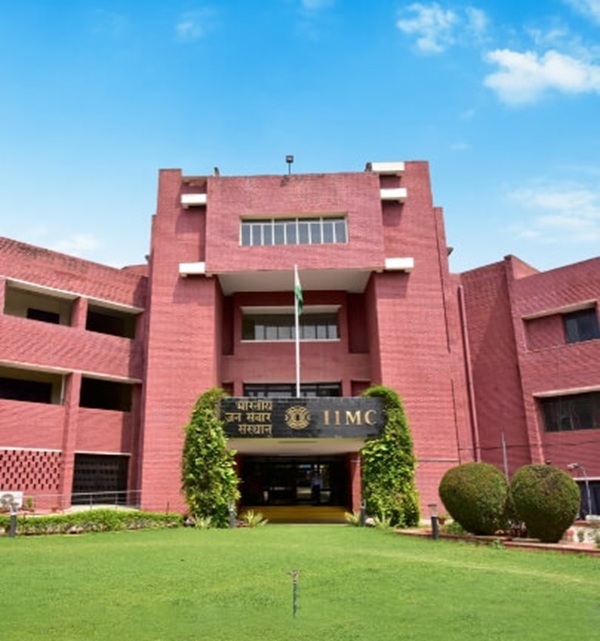
NEW DELHI, March 20 – The Indian Institute of Mass Communication (IIMC), recently elevated to the status of a ‘Deemed to be University,’ has officially declared the final results for its first-ever Doctor of Philosophy (PhD) programme for the academic year 2025-26. The results, announced on March 19, 2026, mark a significant milestone in the 60-year history of the institution, transitioning it from a premier training hub into a full-fledged center for advanced academic research.
According to the official notification signed by Prof. (Dr.) Rakesh Kumar Goswami, Controller of Examinations, a total of 22 scholars have been declared successful in this inaugural batch. The list of selected candidates includes 18 full-time scholars and 4 part-time scholars across various categories, including Unreserved (UR), EWS, SC, ST, and OBC/NCL. Among the top successful candidates for the full-time programme are Kajal Kumari Singh, Snigdha Maheshwari, and Sanjay Kumar, while Nitin Kumar Choudhary and Madhurendra Kumar are among those selected for the part-time track.
The successful candidates are now required to submit their first-semester fees by March 23, 2026, to secure their admission. The commencement of the academic session and coursework is scheduled to begin on April 1, 2026.
The declaration of these results is the culmination of a rigorous and transparent selection process that began earlier this year. The journey started with the call for online applications on January 1, 2026. While the original deadline for applications was January 30, the Institute issued an extension notice, allowing aspiring scholars to submit their forms until February 10, 2026, to ensure wider participation from across the country. Following the application phase, IIMC conducted an entrance examination on February 15, 2026, specifically for part-time candidates who did not possess a UGC-NET qualification. The results of this entrance test were declared on February 20, leading to the publication of the shortlist for interviews on February 23.
The interview phase, a critical component of the selection, was held from March 9 to March 11, 2026, at the IIMC New Delhi campus. Candidates were divided into morning and afternoon slots. Full-time applicants were interviewed on the first two days, while part-time candidates appeared on the final day. During these interviews, scholars were required to present their Research Proposals and Statements of Purpose (SOP) via PowerPoint presentations to a panel of experts. The final merit list was prepared by giving 70% weightage to the UGC-NET/JRF percentile or entrance exam score and 30% weightage to the interview performance.
The PhD programme was designed to attract high-caliber researchers. The eligibility criteria required candidates to have a Master’s degree in Journalism, Mass Communication, or allied Social Science disciplines with at least 55% marks. Alternatively, candidates with a four-year Bachelor’s degree with research were eligible if they secured a minimum of 75% marks or a CGPA of 7.5. The Institute offered a maximum of 22 seats for the 2025-26 session, adhering strictly to the reservation mandates of the Government of India. The breakup included 18 seats for full-time researchers and 4 seats for part-time candidates. To promote global academic exchange, IIMC also provided for supernumerary seats for international scholars, up to 10% of the total admissible strength.
For part-time candidates, the requirements were even more specific. Applicants needed at least three years of experience in media, mass communication, or allied industries and were required to submit a ‘No Objection Certificate’ (NOC) from their current employers. This ensures that working professionals can balance their research with their official duties while committing to the mandatory six-month coursework.
The launch of the PhD programme is more than just an academic addition; it is the fulfillment of a long-standing vision. IIMC was established on August 17, 1965, with the primary goal of teaching and training. However, on January 31, 2024, the Ministry of Education granted it Deemed to be University status under a Distinct Category, empowering it to award degrees.
Vice Chancellor Dr. Pragya Paliwal Gaur, in her message to aspiring scholars, described the launch as a significant milestone and a natural extension of the long-standing commitment of IIMC to serious research and scholarly engagement. She emphasized that the programme is designed to provide a rigorous academic environment that encourages interdisciplinary scholarship and addresses contemporary media challenges.
The programme aims to foster original thought in areas such as:
- Digital Media and Artificial Intelligence
- Political and Development Communication
- Media Ethics, Laws, and Governance
- Strategic Communication and Media Business Studies
The Centre for Media & Communication Research (CEMCOR) has been designated as the institutional anchor for the programme, ensuring that scholars have a dedicated space for their intellectual inquiries.
Scholars joining IIMC will have access to some of the finest research facilities in the country. The Pt. Yugal Kishore Shukla Library and Knowledge Resource Centre is the largest specialized media library in India, boasting a collection of approximately 38,000 volumes. The library is fully computerized and provides access to global scholarly e-journals through the One Nation One Subscription (ONOS) initiative. Furthermore, the doctoral students will be mentored by a highly qualified faculty, all of whom hold doctoral degrees and possess extensive records of research publications in national and international journals. Faculty specializations cover a vast range, from Health Communication and Political Economy to Cinema Studies and Data Journalism.
The PhD programme is structured into two parts: Part I (Coursework) and Part II (Thesis Work). All scholars, regardless of being full-time or part-time, must complete six months of mandatory coursework. This coursework includes core subjects like Research Methodology, ICTs for Research, and Research and Publication Ethics. To ensure the highest standards of academic integrity, IIMC will utilize advanced software to detect plagiarism. The evaluation process is equally stringent; the final thesis will be reviewed by the research supervisor and at least two external experts. The degree will only be conferred after a successful viva-voce examination. The duration of the programme is a minimum of three years and a maximum of six years, with certain relaxations provided for female scholars and persons with disabilities.
With the commencement of coursework on April 1, 2026, IIMC will enter a new era. The Institute, which has consistently been ranked as the number one media training institution in India by surveys like India Today and The Week, is now poised to become a global think tank.
The Institute continues to offer a variety of other Master’s Degree and Post Graduate Diploma programmes across its regional campuses in Dhenkanal, Amravati, Kottayam, Aizawl, and Jammu. However, the spotlight remains on the 22 pioneers who are about to embark on their doctoral journey at India’s premier media university.
Contact Information: For further queries regarding the PhD admission process, candidates are advised to visit the official website at www.iimc.gov.in or contact the admission cell via email at phdadmission.iimc@gmail.com.
Click Here for More Exams / Admission